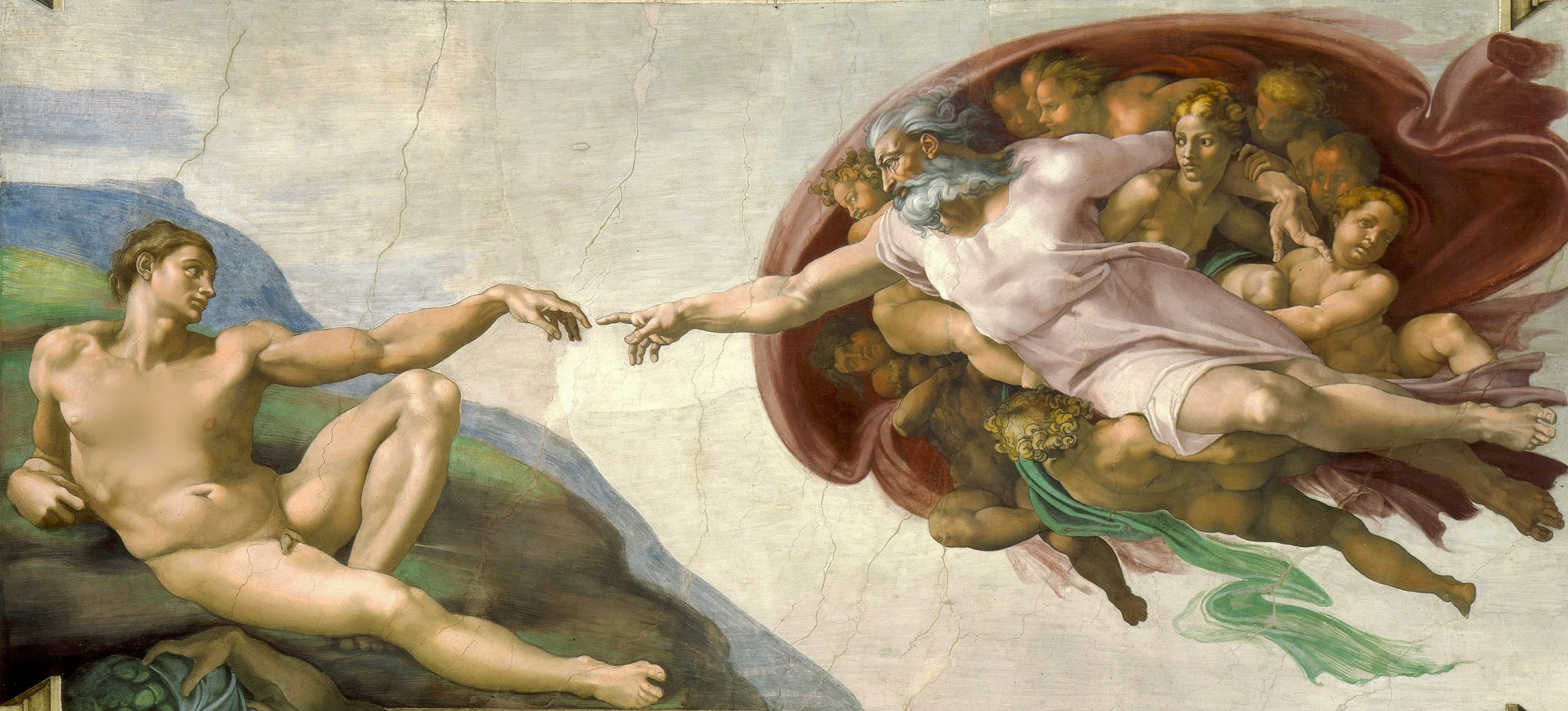
“So God created man in his own image, in the image of God he created him; male and female he created them.”
— Genesis 1:27 · RSV-CE
Athens, Jerusalem, Rome, Christendom
Classical education is a conversation across four cities. From Athens we inherit wonder and the pursuit of truth. From Jerusalem we inherit the revelation that every person is made in the image of God. From Rome we inherit order, law, and the care of the weak. From Christendom we inherit the insight that in the Body of Christ no member is dispensable — and that the unlikely members are honored with greater honor, not less. This is the tradition Virtualis stands in, and it is the tradition we offer every family.
From Athens we inherit the conviction that every human being by nature desires to know — that wonder, not utility, is the beginning of wisdom. Philosophy is not the privilege of the quick-witted. It is the birthright of any soul that can marvel.
From Jerusalem we inherit the revelation that every person — from conception to natural death — bears the image of God. This dignity is not earned, not conditional, not ranked. It is the first and last word about every human life.
From Rome we inherit the habit of ordered care — the conviction that a well-ordered community protects its weakest members as a matter of justice, not pity. Roman virtue begins with pietas: reverence for those to whom we are bound.
From Christendom we inherit St. Paul’s teaching that the Body of Christ is one body with many members, and that the parts which seem weakest are clothed with greater honor. No child is a spare part. No child is carried; every child carries the rest of us.
The Heart of It: Dr. Amy Gilbert Richards
No one has thought more beautifully about disability and classical education than Dr. Amy Gilbert Richards, philosopher, Templeton Honors College fellow, and author of Disability and Classical Education: Student Formation in Keeping with Our Common Humanity (opens in new tab). Her vocabulary is the vocabulary we try to borrow here at Virtualis, and we recommend her work to every family who reads this page.
Strange Vocations
Dr. Richards draws the phrase strange vocations from St. Augustine (by way of Brian Brock). Disability, she writes, is not a problem to solve but a vocation — a calling that disrupts “the predictable world and so disorients us, making us conscious of the extent to which we are all vulnerable.” The strange vocation does not ask for pity. It illuminates the very crux of our common humanity.
From “Strange Vocations: Anthropology, Disability, and the Heart of Classical Education” (opens in new tab), Principia: A Journal of Classical Education (Baylor), 2023.The Doxological Classroom
Modern education, Dr. Richards argues, is built on instrumental attention — attention in service of utility, of mastery, of becoming materially successful. But the classical classroom is built on something older. She prefers to call it a doxological classroom, because in the right order “we adore before we know or do.” Worship precedes skill. Wonder precedes mastery. Praise precedes productivity.
This is not a pious slogan. It is an anthropological claim. A child who cannot “produce” at grade level can still adore. And adoration is the first act of the intellectual life.
Telic Attention, not Transactional
The word telos is Greek for “end” or “purpose.” Telic attention is attention ordered toward the end for which a thing exists. A human being’s telos is not employability. It is communion with God and neighbor. Education, rightly conceived, trains us in telic attention — not transactional attention that measures every child against a productivity metric.
Dr. Richards writes that the doxological classroom offers “the marriage of excellence and adaptability, of order and love, of the transcendent living in the immanent and calling us toward the fullness of our common humanity.”
Against the Cult of Normalcy
The great enemy of this tradition, Dr. Richards warns, is what she calls the cult of normalcy — the contemporary instinct to see disability as a defect and the non-disabled body as the measure of the human. Classical Christian education rejects this outright. The measure of the human is the image of God, not the statistical middle of the bell curve. Every child we receive is fully human, fully capable of wonder, fully called.
Pied Beauty
Glory be to God for dappled things—
For skies of couple-colour as a brinded cow;
For rose-moles all in stipple upon trout that swim;
Fresh-firecoal chestnut-falls; finches’ wings;
Landscape plotted and pieced—fold, fallow, and plough;
And áll trádes, their gear and tackle and trim.
All things counter, original, spare, strange;
Whatever is fickle, freckled (who knows how?)
With swift, slow; sweet, sour; adázzle, dim;
He fathers-forth whose beauty is past change:
Práise hím.
What This Looks Like at Virtualis
The philosophy is the foundation. Here is what it looks like on a Tuesday morning in a Great Hearts Online classroom — concretely, not abstractly:
Every child is received
We welcome conversations with families whose students have IEPs, 504 plans, dyslexia, ADHD, autism, 2e profiles, anxiety, physical differences, and chronic illness. We do not begin with “can they keep up?” — we begin with “what does this child need in order to flourish?”
Small, live, Socratic
Great Hearts Online classes are live and small. Children do not disappear into a lecture. The teacher sees each student, knows each student by name, and can adapt Socratic questioning to the student in front of them.
Genuine accommodations
Extended time, audio read-alouds, alternative assessment formats, sensory breaks, and modified pacing are available as needed. We work with parents to shape a learning rhythm the child can actually inhabit.
The parent is primary
Virtualis treats the parent as the primary educator. For students with special vocations, this is doubly true. No one knows your child as you do, and our job is to support your work, not override it.
Clinical partnership
Through our partnership with Vitae Health (opens in new tab), some families may access clinical consultations and documentation relevant to diagnosis, ESA eligibility, or care planning, where appropriate. Availability and scope vary.
ESA-aware guidance
Arizona families may be eligible for ESA funds, including the ESA special-needs category, toward Virtualis tuition and related services. Eligibility is determined by the Arizona Department of Education, not by us. We help families understand the landscape; we do not gatekeep.
We do not promise that Virtualis is the right fit for every child. Some students need more in-person therapy, more clinical supervision, or more one-to-one aid than an online classical school can provide. We will tell you honestly when that is the case. What we promise is that we will look at your child as a person with a vocation, not a file with a diagnosis, and that we will tell you the truth about what we can and cannot do.
Common Questions
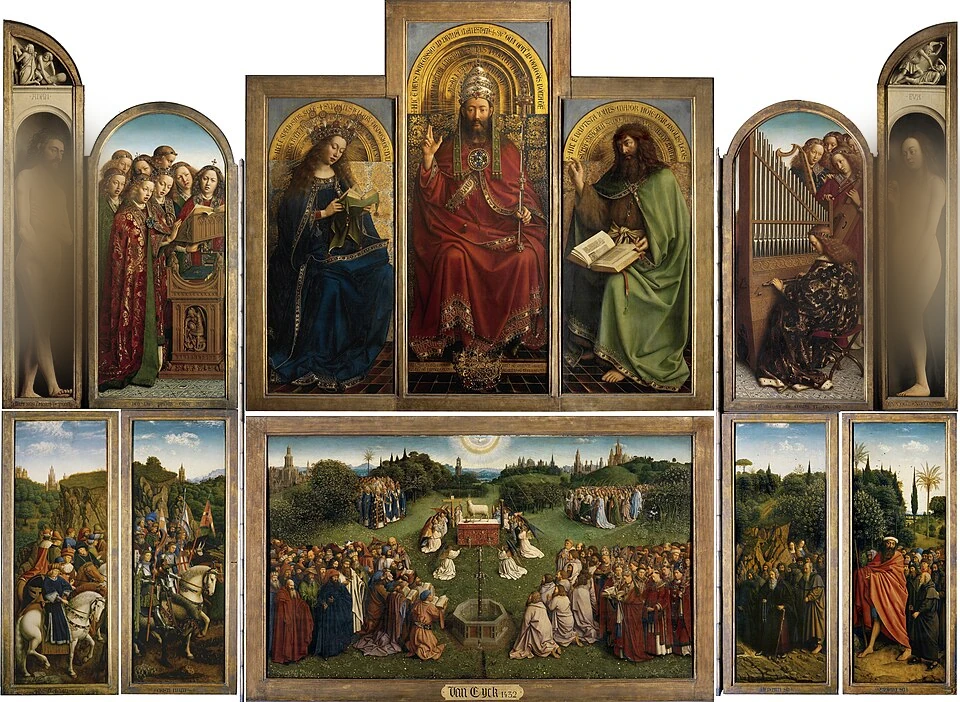
The Adoration of the Mystic Lamb
Come and See
Every conversation starts the same way: we listen. Tell us about your child, their diagnosis if they have one, their strengths, their struggles, and what you hope for them. We will tell you honestly whether Virtualis can serve them well.
Start a Conversation Begin Enrollment