
Language That Shapes the Soul
The Christian classical tradition holds that language is not merely a human tool but participates in the divine Logos — the Word through whom all things were made. To study language well is therefore both an intellectual discipline and an act of reverence.
At Virtualis, English Language Arts means immersion in the Great Books — works that have shaped civilization’s understanding of truth, goodness, and beauty — mastery of grammar and composition, and the disciplined practice of reading, writing, and speaking that has formed great minds for over two thousand years. Through great literature, students do not merely learn about the good — they learn to love it, forming the moral imagination that orders the soul toward what is true.
Our students read complete, unabridged works — not excerpts or textbook summaries. From Homer and Virgil to Shakespeare and Dostoevsky, they encounter the greatest minds in the Western tradition and wrestle with the permanent questions: What is justice? What does it mean to live well? What is the nature of courage, love, and truth?
Every literature discussion follows the Socratic method — not simply “class discussion with questions,” but the structured dialogue Socrates himself practiced in the dialogues of Plato. In our live online seminars, students and teacher meet face-to-face in small-group video sessions. Students arrive with annotated texts and prepared questions, and the teacher guides discussion through a deliberate sequence of inquiry. They learn to defend ideas with textual evidence, to listen before speaking, and to change their minds when confronted with better arguments.
Why the Great Books? The Case Every Parent Should Hear
The Oldest and Most Effective Form of Education
Reading the Great Books in community is not a trend. It is the oldest continuously practiced form of intellectual and moral formation in the Western world, stretching from Plato’s Academy through the medieval university to the classical revival of our own time. Mortimer Adler, in How to Read a Book (1940), argued that genuine education requires the direct encounter between a student’s mind and a great author’s mind — with no textbook standing in between. A summary of Homer is not Homer. A textbook chapter about Shakespeare is not Shakespeare. The Great Books are the education.
Adler was not alone. Louise Cowan, the literary scholar who shaped the Great Books curriculum at the University of Dallas, insisted that the great works of literature are not historical artifacts to be studied but living voices that make claims on the reader. A student who reads the Iliad is not merely learning about the ancient Greeks — she is being confronted with permanent questions about honor, grief, and the cost of glory that she will face in her own life.
Literature and the Truth About Human Nature
C. S. Lewis warned in The Abolition of Man (1943) that a generation educated without the old books — without what he called the Tao, the common moral inheritance of humanity — would produce not free thinkers but “men without chests”: clever enough to argue, but with no trained affections to guide them toward what is good. Lewis understood what every classical educator knows: literature does not just transmit information. It forms the moral imagination. A child who weeps at the death of Hector, who admires the courage of Antigone, who recoils from the treachery of Macbeth, is learning to love what is good and hate what is wicked — not by memorizing rules, but by living vicariously through the greatest moral dramas ever written.
This is the transcendental of truth at work. Great literature reveals human nature as it really is — not as an ideology wishes it were. The student who reads Dostoevsky’s Raskolnikov learns more about the psychology of sin than any sociology textbook can teach. The student who reads Augustine’s Confessions learns more about the restlessness of the human heart than any self-help bestseller will ever offer.
The Evidence: Great Books Readers Think Better
The case is not merely philosophical — it is measurable. Studies in critical thinking consistently show that students who engage with primary texts and original sources outperform students who rely on textbooks and secondary summaries. The Association of American Colleges and Universities has documented that sustained engagement with complex texts is among the strongest predictors of critical thinking growth across all disciplines. Dorothy Sayers, in her landmark essay The Lost Tools of Learning (1947), argued that composition taught in connection with great models produces writers who think clearly — because clear writing is clear thinking made visible.
Great Hearts Academies, whose curriculum Virtualis delivers, have demonstrated this at scale: their students consistently outperform state and national averages on reading and verbal assessments, not because of test prep, but because students who have spent years reading Thucydides, Austen, and Dante develop the analytical muscles that standardized tests are built to measure.
What This Means for Your Child
Your child will not read about great books at Virtualis. She will read the books themselves — the whole books, in community, with a teacher trained in the Socratic method. By the time she graduates, she will have read Homer and Virgil, Shakespeare and Dante, Augustine and Dostoevsky. She will know how to parse an argument, defend a thesis, change her mind in the face of evidence, and write with the precision and power that come only from years of reading the best prose and poetry the human race has produced. That is not enrichment. That is the education she was made for.
What We Read
A glimpse of the “Classics to Keep” library a Virtualis student builds across thirteen years — books worthy of a place in every family’s home library.
Wonder & Imagination
Grades K–5
- Charlotte’s Web — E. B. White
- The Chronicles of Narnia — C. S. Lewis
- Little Women — Louisa May Alcott
- The Hobbit — J. R. R. Tolkien
- A Wrinkle in Time — Madeleine L’Engle
- The Velveteen Rabbit — Margery Williams
- The Secret Garden — Frances Hodgson Burnett
- Island of the Blue Dolphins — Scott O’Dell
Question & Argue
Grades 6–8
- Beowulf — Seamus Heaney trans.
- Sir Gawain and the Green Knight
- A Midsummer Night’s Dream — Shakespeare
- The Merchant of Venice — Shakespeare
- To Kill a Mockingbird — Harper Lee
- Lord of the Flies — William Golding
- The Diary of Anne Frank
- Selected tales — Edgar Allan Poe
Wrestle & Wrought
Grades 9–12
- The Iliad & The Odyssey — Homer
- The Republic — Plato
- The Aeneid — Virgil
- The Divine Comedy — Dante
- King Lear & Macbeth — Shakespeare
- Paradise Lost — Milton
- Crime and Punishment — Dostoevsky
- The Brothers Karamazov — Dostoevsky
Reading lists are representative. Specific titles may vary by year and grade level.
How We Teach
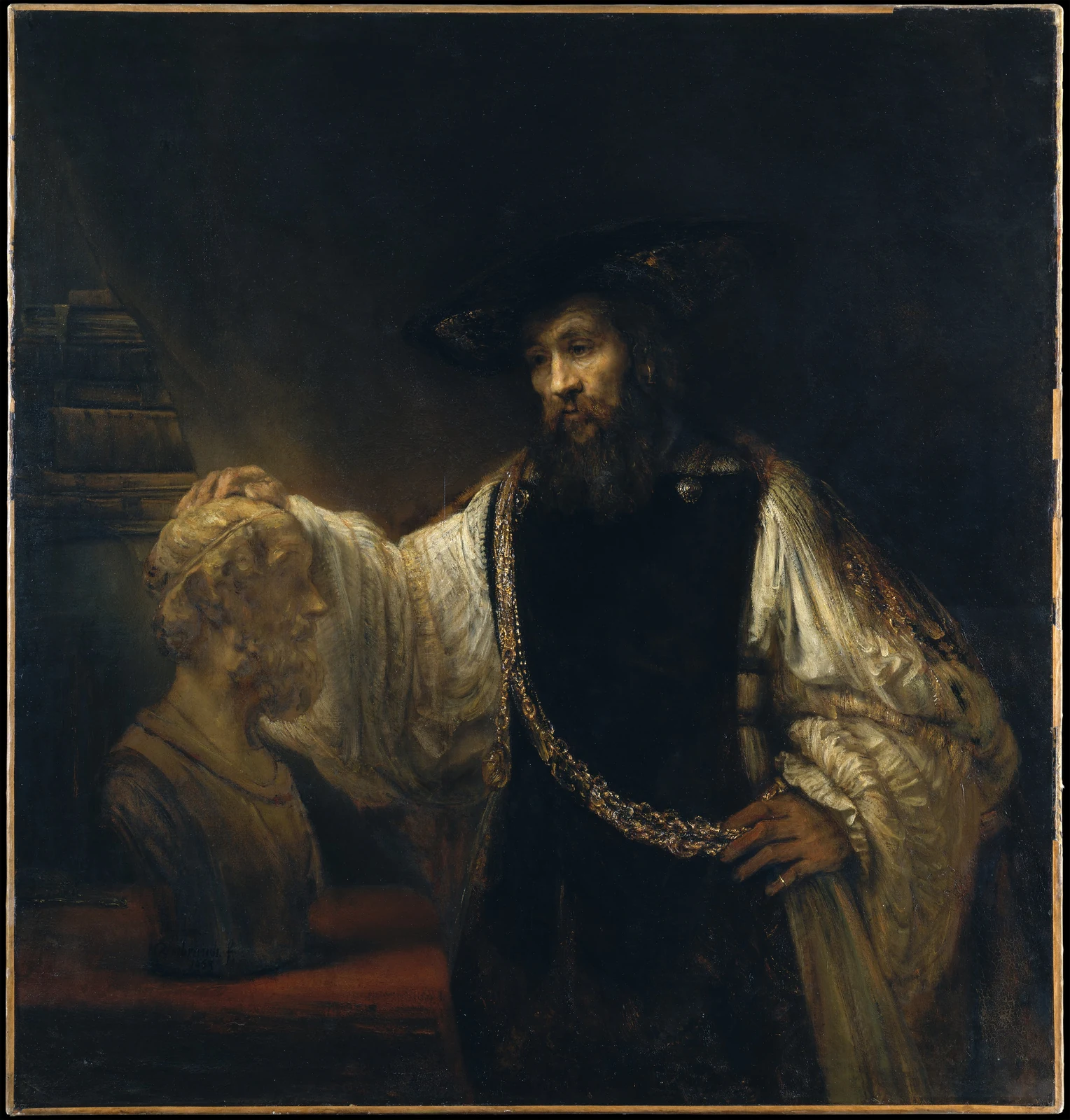
Live Socratic Seminar
Every literature class at Virtualis is taught live by a credentialed teacher in a small online cohort. There are no recorded lectures and no auto-graded multiple-choice quizzes standing in for a real conversation. Students arrive with their text annotated and their questions written. The teacher guides — she does not lecture — through a deliberate sequence of inquiry, drawing students into the kind of dialogue Plato preserved for us in The Republic.
Spalding Phonics & Disciplined Writing
In the grammar stage, students learn to read and write through the Spalding method — a rigorous, multisensory phonics program that teaches English from its 70 phonograms, building fluent readers from day one. As the years progress, writing instruction moves through imitation, structured composition, formal literary analysis, and finally rhetoric — the classical art of moving an audience through well-chosen words, sound reasoning, and appeals to truth and beauty.
Humane LettersPhasing in Fall 2028+
In grades 9–12, English and History merge into a single integrated seminar called Humane Letters — the signature course of a Great Hearts education and the crown of the classical curriculum. Students spend two hours each day in teacher-guided Socratic dialogue, reading philosophy, drama, history, autobiography, poetry, novels, and essays from across the Western tradition. This is where the classical education comes together — where grammar, logic, and rhetoric meet the permanent things.
Thy word is a lamp unto my feet, and a light unto my path.— Psalm 119:105
Common Questions
Students read complete, unabridged Great Books rather than excerpts or textbook summaries. From Charlotte’s Web and Narnia in the grammar stage, through Beowulf, Shakespeare, and To Kill a Mockingbird in middle school, to Homer, Plato, Dante, Dostoevsky, and the full Western canon in the high-school Humane Letters seminar. See the full reading list for representative titles by grade.
Live, small-cohort Socratic seminar with a credentialed teacher. Students annotate their text before class, defend interpretations from textual evidence, and learn to listen as carefully as they speak. There are no recorded lectures and no auto-graded textbook exercises in place of conversation.
Humane Letters is the signature course of a Great Hearts upper school. From 9th through 12th grade, English and History merge into a single two-hour daily Socratic seminar through which students wrestle with the foundational texts of the Western tradition. The two-hour block exists because real Socratic dialogue, annotated reading, and student-led discussion cannot happen in a 45-minute period.
Most public-school English programs assemble excerpts from anthologies and assign formulaic writing. Virtualis assigns whole books, teaches structured Socratic discussion, uses the Spalding phonics method to build fluent readers from kindergarten, and treats writing as the disciplined craft of clear thinking on paper.
Yes. Grammar is taught from the earliest grades through the Spalding phonics program, with sentence diagramming, formal mechanics, and weekly composition. Latin instruction beginning in middle school reinforces English grammar by teaching the inflected logic of language. Grammar at Virtualis is treated as freedom, not restriction — the discipline that lets a student say exactly what she means.