
The Language of the Western Tradition
Latin is not a dead language. It is the living heartbeat of Western intellectual history — the tongue of Cicero and Caesar, of Augustine and Aquinas, of Dante and the Vulgate, of the Church and the university. For more than two thousand years, Latin was the shared language of educated men and women across Europe. To know Latin is to enter that conversation directly, without intermediaries.
At Virtualis, a Christian classical academy rooted in the Catholic intellectual tradition, Latin is not optional or marginal. Beginning in sixth grade, every student studies Latin daily — three years of foundational grammar in middle school followed by four years of authentic reading in high school. Students do not merely learn about Latin: they learn to read it, parse it, recite it, and eventually compose in it.
Through Latin, students build the precise vocabulary that supercharges their English, the analytical discipline that sharpens their thinking, and the historical literacy that connects them to two millennia of Christian and classical inheritance. It is the most efficient path we know to a serious mind.
More than 60% of English words derive from Latin roots, and the figure rises to over 90% in scientific, medical, and legal terminology. Latin’s highly inflected grammar — five declensions, four conjugations, six tenses, three moods — trains students to think with structure and precision. And because Latin is the official language of the Roman Catholic Church and the Mass for nearly two thousand years, to pray, sing, and read in Latin is to join the unbroken chorus of Christendom across the centuries.
Why Latin? The Case Every Parent Should Hear
The Data: Latin Students Outperform Everyone
This is not sentiment — it is measurement. Students who study Latin consistently outperform students of every other foreign language on standardized verbal and reading assessments. The College Board’s own data shows that Latin students score higher on the SAT verbal section than students of Spanish, French, German, or any modern language — and the gap widens with each additional year of study. The Educational Testing Service has documented this advantage for decades.
The reason is structural: Latin’s inflected grammar forces students to parse every sentence into its logical components. A student who can identify a Latin ablative absolute can identify an English dangling modifier without being taught the rule. The grammar transfers because the analytical habit transfers.
The Vocabulary: 60% of English Comes from Latin
More than 60% of English words derive from Latin roots. In scientific vocabulary, the figure exceeds 90%. In legal terminology, it approaches 95%. A student with three years of Latin does not need to memorize SAT vocabulary lists — she already knows the roots. Benevolent is bene (well) + volens (wishing). Circumscribe is circum (around) + scribere (to write). The Latin student does not guess at English words. She reads them from the inside out.
Tracey Lee Simmons, in Climbing Parnassus: A New Apology for Greek and Latin, puts it plainly: Latin and Greek are not ornamental accomplishments for the privileged. They are the most efficient tools ever devised for building a precise, flexible, and powerful command of English.
The Discipline: Grammar as Formation of the Mind
Dorothy Sayers argued in The Lost Tools of Learning (1947) that Latin is the ideal vehicle for the Grammar stage of the Trivium — not because every child needs to read Virgil (though many will), but because Latin’s visible, rule-governed structure trains the mind to think in categories, to hold multiple variables in suspension, and to derive meaning from structure rather than from context alone. These are the skills that transfer to mathematics, to scientific reasoning, to legal argument, and to every other discipline that requires precision.
Cheryl Lowe, founder of Memoria Press and one of the most influential Latin educators in the classical revival, states it directly: “Latin is the most effective tool we have for teaching English grammar, building vocabulary, and training students in the habits of careful, systematic thought.”
The Tradition: Access to the Original Sources
The Western intellectual tradition was written in Latin. Not translated into Latin — written in it. Augustine’s Confessions, Aquinas’s Summa Theologiae, Boethius’s Consolation of Philosophy, the Vulgate Bible, the documents of every Church council from Nicaea to Vatican II, the scientific works of Newton and Linnaeus, the political philosophy of Cicero and Seneca — all of these exist in Latin, and every English translation is an interpretation. A student who reads Latin reads the original voice. Everyone else reads someone else’s opinion of what the original voice said.
The Faith: The Language of the Church
For Catholic and liturgically minded Christian families, Latin holds a deeper significance still. It is the language of the Roman Rite, the language of the Church Fathers, the language in which the Creed was formulated and the Mass was celebrated for nearly two millennia. To pray in Latin — Pater noster, qui es in caelis — is to join a chorus that stretches from the catacombs of Rome to your child’s desk. No other school subject connects a student to the communion of saints in quite this way.
The Second Vatican Council’s Sacrosanctum Concilium (1963) affirmed that “the use of the Latin language is to be preserved in the Latin rites” (SC §36). The study of Latin is not nostalgia. It is fidelity to a living tradition that the Church herself has never abandoned.
What We Read
The Latin authors our students read in the original across seven years, from first declensions to Christian Latin.
Roots & Roman Lives
Grades K–5 (family-directed, not part of the formal GHO curriculum)
- Famous Men of Rome (Haaren & Poland)
- D’Aulaires’ Book of Greek Myths
- Song School Latin (optional home enrichment)
- Latin prayers & church hymns
- Simple Vulgate verses (family devotion)
Wheelock & Translation
Grades 6–8
- Wheelock’s Latin (begun)
- Latin for the New Millennium
- Adapted selections from Caesar
- Adapted Horace & the Aeneid
- Vulgate New Testament (sel.)
- Ecce Romani I–III
- Great Hearts Latin syllabus
Cicero to Aquinas
Grades 9–12
- Caesar — De Bello Gallico
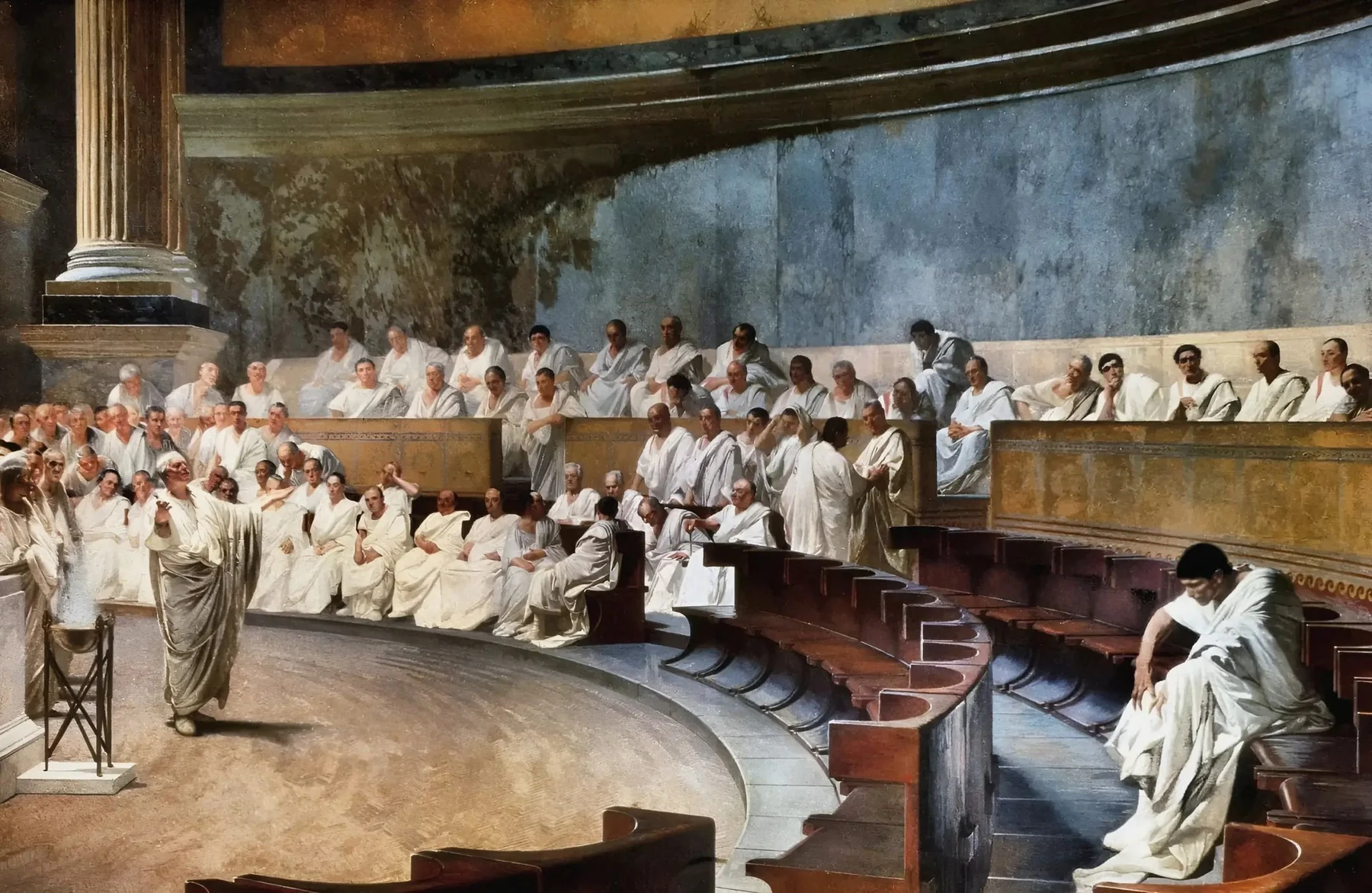
- Cicero — In Catilinam
- Virgil — Aeneid (AP books)
- Ovid — Metamorphoses (sel.)
- Augustine — Confessions (sel.)
- Aquinas — Summa Theologiae (sel.)
- The Vulgate Bible
- Great Latin hymns of the Church
Reading lists are representative. Specific texts may vary by year. Eleventh grade follows the College Board AP Latin syllabus.
How We Teach
Live, Daily Instruction
Every Latin class meets live with a credentialed teacher. Latin requires daily contact — sustained, accountable practice with a real teacher who can correct pronunciation, parse difficult sentences in real time, and answer questions as they arise. There are no recorded lectures and no auto-graded drills standing in for a teacher.
Recitation, Chant, and Memory
Following the classical method, students recite paradigms aloud, chant declensions and conjugations together, and memorize key vocabulary weekly. The youngest grades sing prayers and stories in Latin; older students recite passages of Cicero and Virgil from memory. Latin is treated as a living, spoken language, not a code to be cracked in silence.
Translation and Composition
Students translate Latin daily — first short sentences, then connected passages, then unadapted authors. By the upper grades, students also compose original Latin sentences and paragraphs, learning the language from the inside out. The twelfth-grade capstone seminar culminates in original composition alongside reading Augustine and Aquinas.
Integration with the Trivium
Latin is not isolated. It reinforces English grammar, deepens history and literature, supports theology, and even supports science through medical and biological terminology. When students read Famous Men of Rome in history, they meet the same vocabulary in Latin class. The disciplines speak to one another.
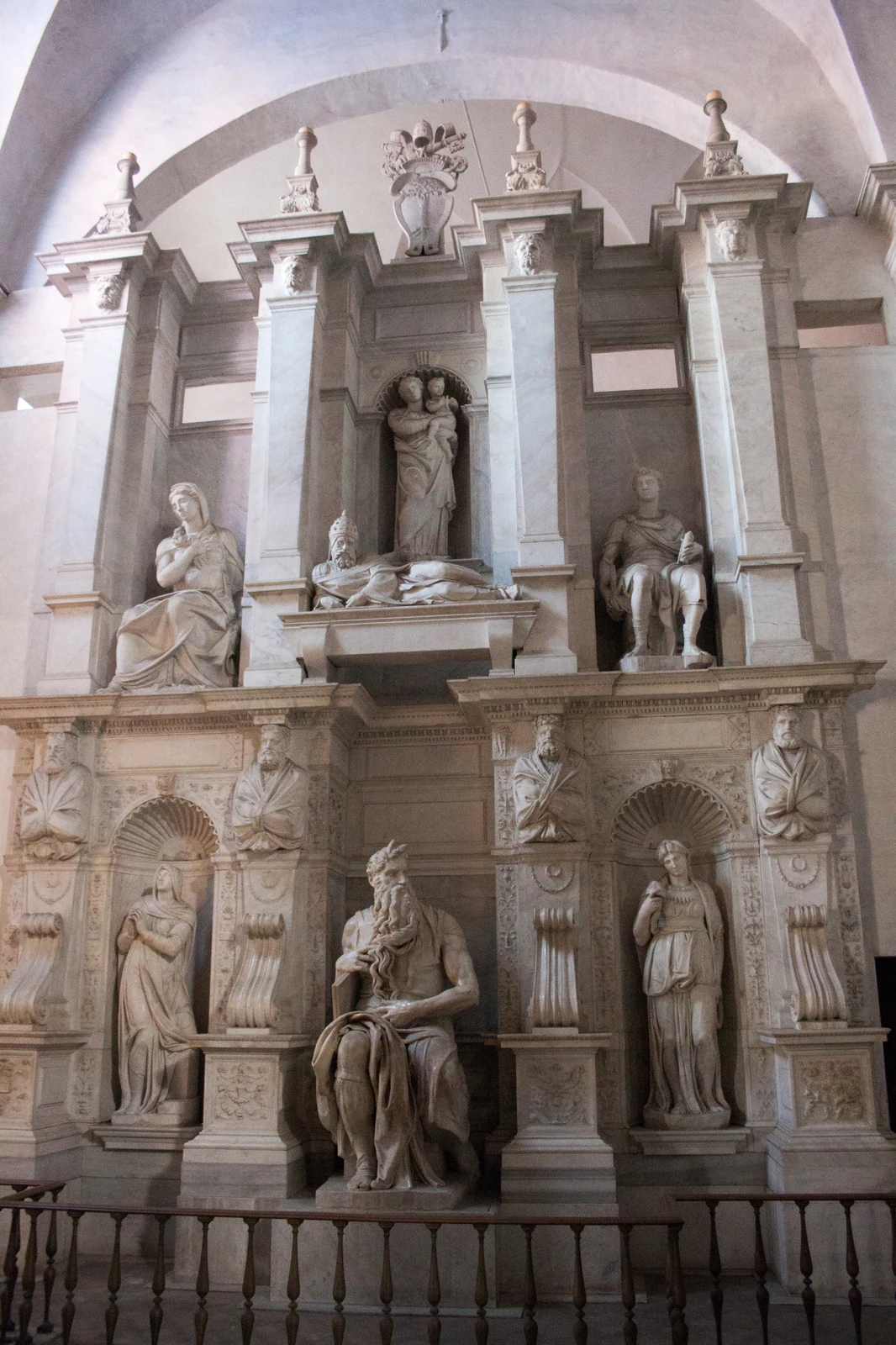
For the invisible things of him from the creation of the world are clearly seen, being understood by the things that are made, even his eternal power and Godhead.— Romans 1:20
Common Questions
Latin is the mother tongue of the Western tradition and the root of more than 60% of English vocabulary (rising to over 90% in scientific, medical, and legal terminology). It trains precise reasoning through its highly inflected grammar, opens the great books in the original, and connects a student directly to two thousand years of Christian and classical inheritance. It is the most efficient path we know to a serious mind.
Seven full years, beginning in sixth grade. Three years of foundational grammar and vocabulary in middle school, followed by four years of authentic reading in high school: Caesar and Cicero in ninth, Virgil and Ovid in tenth, the AP Latin syllabus in eleventh, and a capstone seminar in Christian Latin with Augustine and Aquinas in twelfth.
Both. Students translate daily, but they also recite paradigms aloud, chant declensions and conjugations, memorize passages of Cicero and Virgil from memory, and in the upper grades compose original Latin sentences and paragraphs. Latin is treated as a living, spoken language, not a silent code.
Wheelock’s Latin, Caesar’s De Bello Gallico, Cicero’s In Catilinam, Virgil’s Aeneid, Ovid’s Metamorphoses, Augustine’s Confessions, selections from Aquinas’s Summa Theologiae, the Vulgate New Testament, and the great Latin hymns of the Church.
Yes. Eleventh grade follows the College Board AP Latin syllabus (Virgil’s Aeneid Books I, II, IV, VI alongside Caesar’s De Bello Gallico), and students sit for the AP exam in May. The twelfth-grade capstone seminar then moves into Christian Latin with Augustine, Aquinas, and the Vulgate.