
The Language of Creation
At Virtualis, mathematics is not a collection of disconnected procedures to be memorized and forgotten. It is a discipline through which the human mind encounters the rational order woven into creation by God himself. Every equation balances because the universe is consistent. Every geometric proof holds because truth does not contradict itself.
When our students study mathematics, they are studying the language in which God authored the cosmos — and in doing so, they train their minds in precision, honesty, and wonder. Rooted in the Catholic intellectual tradition, our mathematics program draws on the classical conviction that number, proportion, and pattern are not human inventions but discoveries — realities waiting to be uncovered by the attentive mind.
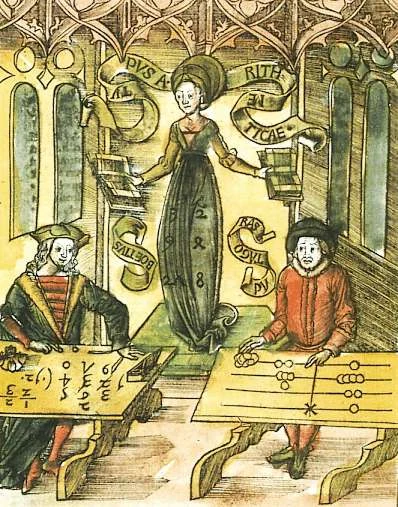
In the elementary grades, Virtualis employs Singapore Mathematics — the same program used by Great Hearts Academies. Every lesson follows a Concrete-Pictorial-Abstract progression: new concepts begin with hands-on manipulatives, move to pictorial representations like bar models and number bonds, and only then introduce the abstract algorithm. Students genuinely understand the mathematics they are performing.
Middle school completes Algebra I by the end of eighth grade — one year ahead of the national norm — and high school Phasing in Fall 2028+ follows the classical sequence: Geometry in 9th, Algebra II and Trigonometry in 10th, Calculus I in 11th, and Calculus II in 12th. By graduation, our students have completed the equivalent of a first-year college calculus course.
Why Mathematics as a Liberal Art? The Case Every Parent Should Hear
Mathematics Is Not a Job Skill — It Is the Language of Creation
The modern world tells children that mathematics is useful. Learn it so you can balance a checkbook, code an app, pass the SAT. The classical tradition says something far more radical: mathematics is beautiful, and learning it is learning to perceive the rational order woven into creation itself. Plato inscribed over the entrance to his Academy the famous injunction: Let no one ignorant of geometry enter here. He did not mean that geometry was a prerequisite for philosophy in the way a course number is a prerequisite for registration. He meant that a mind untrained in mathematical reasoning — in the discipline of following a chain of logic from premise to necessary conclusion — was not yet ready to think about the things that matter most.
Stratford Caldecott, in Beauty for Truth’s Sake: On the Re-enchantment of Education (2009), argued that the modern crisis in mathematics education is not a crisis of rigor but a crisis of meaning. Students are taught to calculate without understanding what calculation reveals. They learn algorithms but never encounter the insight that moved Pythagoras to worship: that the universe speaks in number, and to learn its language is to hear the voice of its Author.
Beauty: Mathematical Proportion Is Beauty in Its Purest Form
The transcendental of beauty finds its purest expression in mathematics. Augustine devoted an entire treatise — De Musica — to the argument that number is the hidden structure of all beauty: the proportions that make a face beautiful, a melody moving, a building harmonious, are all mathematical. The golden ratio appears in the Parthenon, in a nautilus shell, in the spiral of a galaxy, and in the intervals of a major chord. This is not coincidence. It is evidence of a Creator who built beauty into the architecture of the world and gave human beings the mathematical faculty to perceive it.
A child who learns mathematics as a liberal art does not merely learn to solve equations. She learns to see pattern where others see chaos, order where others see randomness, and beauty where others see only numbers. The great mathematicians — Euler, Gauss, Ramanujan — all testified that the experience of mathematical discovery is an experience of beauty, and that the most reliable sign of a correct proof is that it is elegant. We want our students to know that feeling.
Singapore Math: Mastery Through Understanding
The practical question every parent asks is: will my child actually learn math well? The answer is yes — and the evidence is overwhelming. Virtualis uses Singapore Mathematics in grades K through 5, the same program employed by Great Hearts Academies. Singapore Math has been the top-performing primary mathematics curriculum in the world since Singapore first took the number-one position in the Trends in International Mathematics and Science Study (TIMSS) in 1995 — a position it has held or shared in every administration since. The method works because it follows a Concrete-Pictorial-Abstract progression: every concept is introduced with physical manipulatives, represented with bar models and diagrams, and only then expressed as an abstract equation. Students understand why the algorithm works before they are asked to perform it.
The result is genuine mathematical mastery, not superficial fluency. A Singapore-trained student does not memorize multiplication tables through rote drill alone. She understands multiplication as repeated addition, as area, as scaling — and because she understands it, she retains it and can apply it to novel problems. By eighth grade, Virtualis students complete Algebra I — one full year ahead of the national norm — and they complete it with understanding, not anxiety.
What This Means for Your Child
Your child will learn mathematics at Virtualis not as a chore to endure but as a discipline that reveals the hidden order of creation. She will progress from Singapore Math through Geometry, Algebra II, and two semesters of Calculus — a sequence that matches or exceeds the most competitive schools in the country. But more than the sequence, she will carry with her the conviction that mathematics is worth knowing for its own sake — that the proportions of a cathedral, the orbit of a planet, and the logic of a proof all participate in the same beauty, and that to understand them is to understand something true about the world God made. That is mathematics as a liberal art, and it is the education Plato would have recognized.
What We Read
Representative texts and authors our mathematics students encounter from Singapore Math through calculus.
Number & Pattern
Grades K–5
- Singapore Math (Primary 1–5)
- Concrete-Pictorial-Abstract workbooks
- Bar-model problem sets
- Right Start Math manipulatives
- Anno’s Mysterious Multiplying Jar
- The Grapes of Math — Greg Tang
- Math Start series
Reasoning & Proof
Grades 6–8
- Dimensions Math 6–8
- Art of Problem Solving Pre-Algebra
- Art of Problem Solving Algebra I
- Foerster Algebra I
- Euclid — Elements Book I (sel.)
- Beast Academy problem sets
- MATHCOUNTS practice problems
Proof & Calculus
Grades 9–12
- Euclid — Elements Books I–VI
- Jacobs Geometry
- Foerster Algebra II & Trigonometry
- Foerster Calculus
- Stewart Calculus (sel.)
- Newton — Principia (sel.)
- Descartes — La Géométrie (sel.)
- Problem sets & original proofs
Reading lists are representative. Specific texts may vary by year and grade level. High school courses may be offered at the Honors level.
How We Teach
Concrete-Pictorial-Abstract Mastery
Every lesson in the elementary grades follows a three-stage progression: hands-on manipulatives, then pictorial representations, then the abstract algorithm. Students do not learn to multiply by memorizing a procedure — they learn to multiply by watching objects combine, then drawing those objects, and only then writing the symbols that stand for what they have already seen. By the time they reach the abstract stage, the understanding is already there.
Proof-Based Geometry
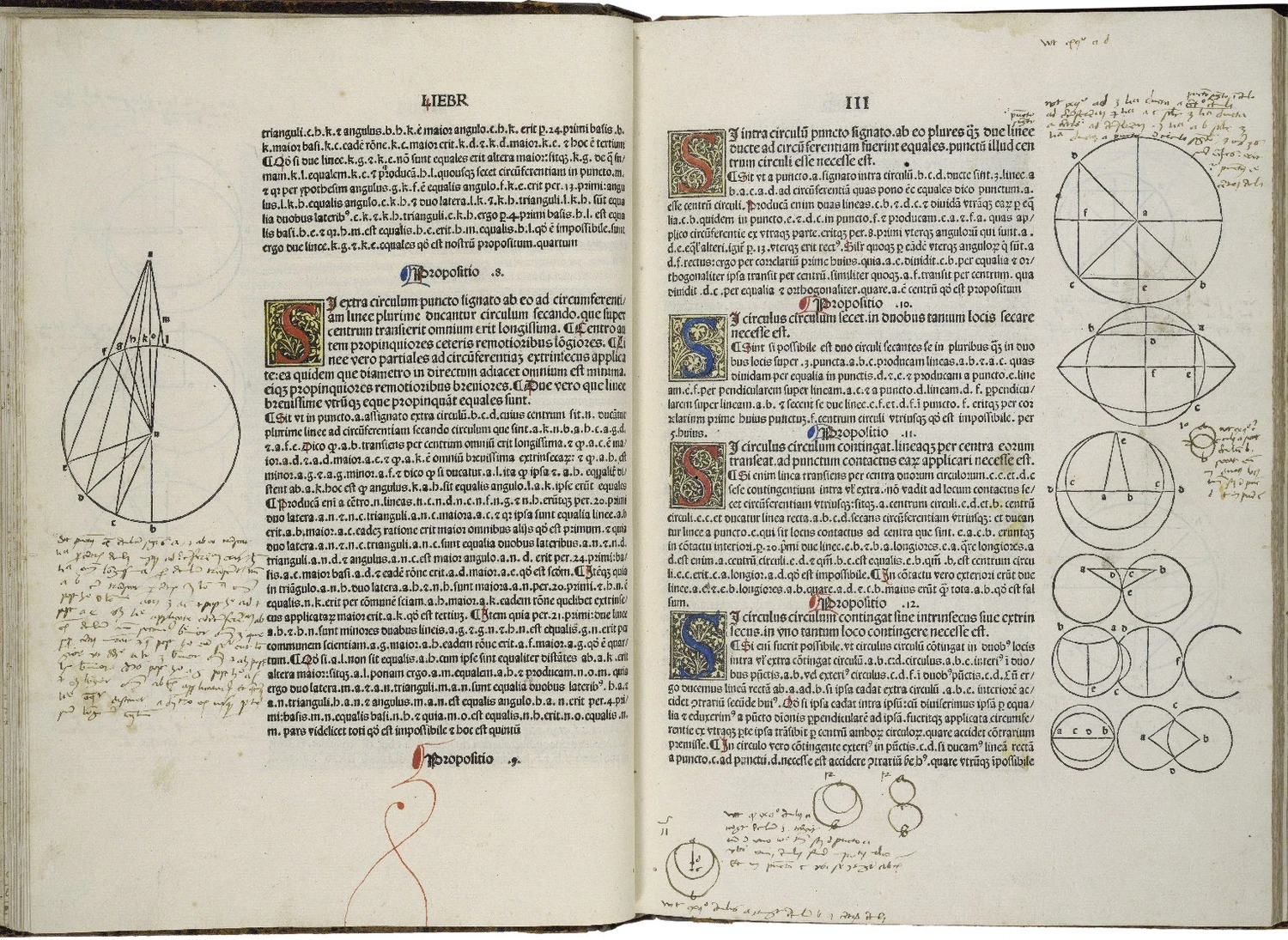
High-school geometry at Virtualis is taught in the tradition of Euclid’s Elements — definitions, postulates, common notions, and propositions built in a chain that a student can follow with her own pen. Proof is not an afterthought to the year; proof is the year. Students emerge from geometry with a permanent sense of what it means for a thing to be demonstrated.
Depth Over AP
Following the Great Hearts model, Virtualis offers Honors courses rather than a College Board AP curriculum. This frees teachers to integrate mathematical study with the broader classical curriculum — connecting geometric proof to logical reasoning in philosophy, or the calculus of planetary motion to the astronomy of the quadrivium. The result is deeper learning, not shallower; our students still outperform their AP-track peers on standardized measures and on college entrance interviews.
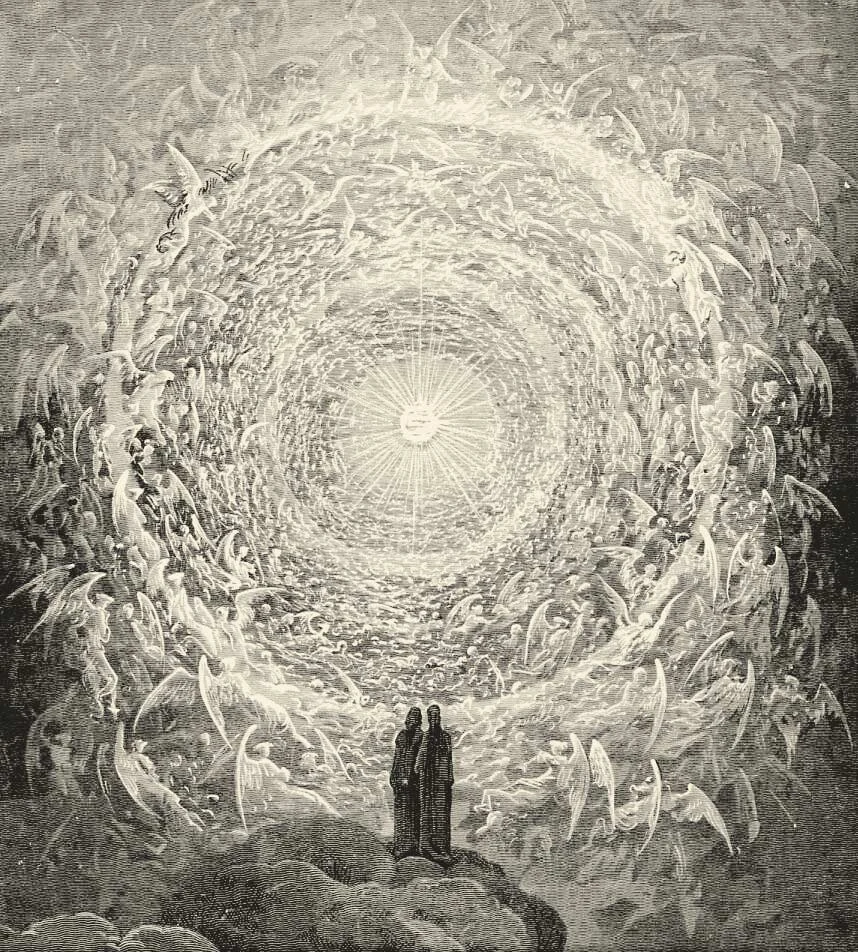
Thou hast ordered all things in measure, and number, and weight.— Wisdom 11:20
Common Questions
Yes. Students complete Algebra I by 8th grade and progress through Geometry, Algebra II and Trigonometry, and two semesters of Calculus by graduation. This sequence matches or exceeds the preparation offered by the most competitive public and private high schools. Data reflects outcomes across the Great Hearts network.
Singapore Mathematics is the highest-rated elementary math curriculum in international comparisons and the program of choice for leading classical schools including Great Hearts and Hillsdale-affiliated schools. Its Concrete-Pictorial-Abstract methodology produces deeper understanding than traditional drill-based programs, while still developing computational fluency.
Live, interactive classes use digital whiteboards, screen sharing, real-time problem solving, and breakout sessions. Students are not watching pre-recorded lectures — they are actively engaged with their teacher and classmates. Manipulatives kits are provided for younger students so the concrete stage of learning happens at home just as it would in a physical classroom.
Our small-class online environment allows teachers to differentiate instruction. Students who are ready for acceleration can be placed appropriately within the course sequence. Students who need additional support benefit from the optional tutoring program and the individualized attention that comes with Socratic instruction in small groups.
Following the model established by Great Hearts Academies, Virtualis emphasizes depth and integration over standardized testing frameworks. Rather than constraining instruction to the College Board’s AP curriculum and testing calendar, our Honors courses cover equivalent or greater depth while allowing teachers the freedom to integrate mathematical study with the broader classical curriculum.