DE ARTIBUS LIBERALIBUS · MARGARITA PHILOSOPHICA · ANNO DOMINI MMXXXIX
Marcus, Class of MMXXXIX Marcus
A Senior Thesis — Class of MMXXXIX

A Defense of the Liberal Arts

Discere ut Vivere — To Learn in Order to Live

My name is Marcus, and this is Sophia. We are seniors at Virtualis Arizona Classical Academy, and thirteen years ago we were handed a tradition older than any living institution in the Western world. This thesis is our defense of that tradition — not because it needs defending, but because defending it is the final act of learning it. We write together because classical education was never a private exercise. It was always a conversation: between student and teacher, between ancient and modern, between Athens and Jerusalem.

What follows is a dramatized senior thesis — the argument two classically trained students might make after thirteen years of formation in the liberal arts. Marcus and Sophia are composites, but the tradition they describe is real, the data they cite is verified, and the education they defend is the one we offer.
Sophia, Class of MMXXXIX Sophia
ΗΘΟΣ Ethos — The Appeal to Character

Aristotle taught that we believe good people more fully than others — not because of what they argue, but because of who they are. We begin with who we are.

Click for Aristotle's definition
Movement I — Who We Were Before

We Sang Before We Argued


Marcus gesturing toward text Marcus speaks

Marcus: I remember the first day of kindergarten. We sang a hymn before we opened a book. We prayed before we recited. My teacher read to us from the Psalms, and then she taught us the letter A. I did not understand at the time that she was doing something as old as the cathedral schools of the twelfth century: uniting worship and intellect so that learning was never merely acquisition. It was always also gratitude.

By second grade I was memorizing Latin declensions alongside Scripture. Amo, amas, amat — and alongside them the first verses of Genesis. By fourth grade I could recite the opening of the Iliad in English from memory: Achilles' rage, the will of Zeus, the coffins of the Greeks. My teacher told me that Homer wrote the first textbook on what it means to be a man, and that I should pay attention.

By seventh grade I knew something had happened to me that none of my cousins at the public school shared. When they asked what I was studying, I said Latin, and logic, and the Bible. They laughed. They stopped laughing when I beat them at debate tournament that spring — but the victory was beside the point. I had been given a language for seeing the world, and it was as native to me now as English.

We sang hymns and recited prayers to unite worship and intellect. We memorized poetry not for performance but because a mind full of beautiful language thinks more beautifully. We read the lives of the saints alongside the lives of the Romans. Morning prayer, Scripture memorization, Latin conjugations: the rhythm of every day was the same rhythm the Benedictines had used for fifteen hundred years.

Movement II — Where This Comes From

Four Civilizations, One Inheritance


Sophia: Classical education did not begin in a boardroom. It was assembled, city by city, century by century, by four civilizations that each contributed something irreplaceable to the formation of the Western mind.

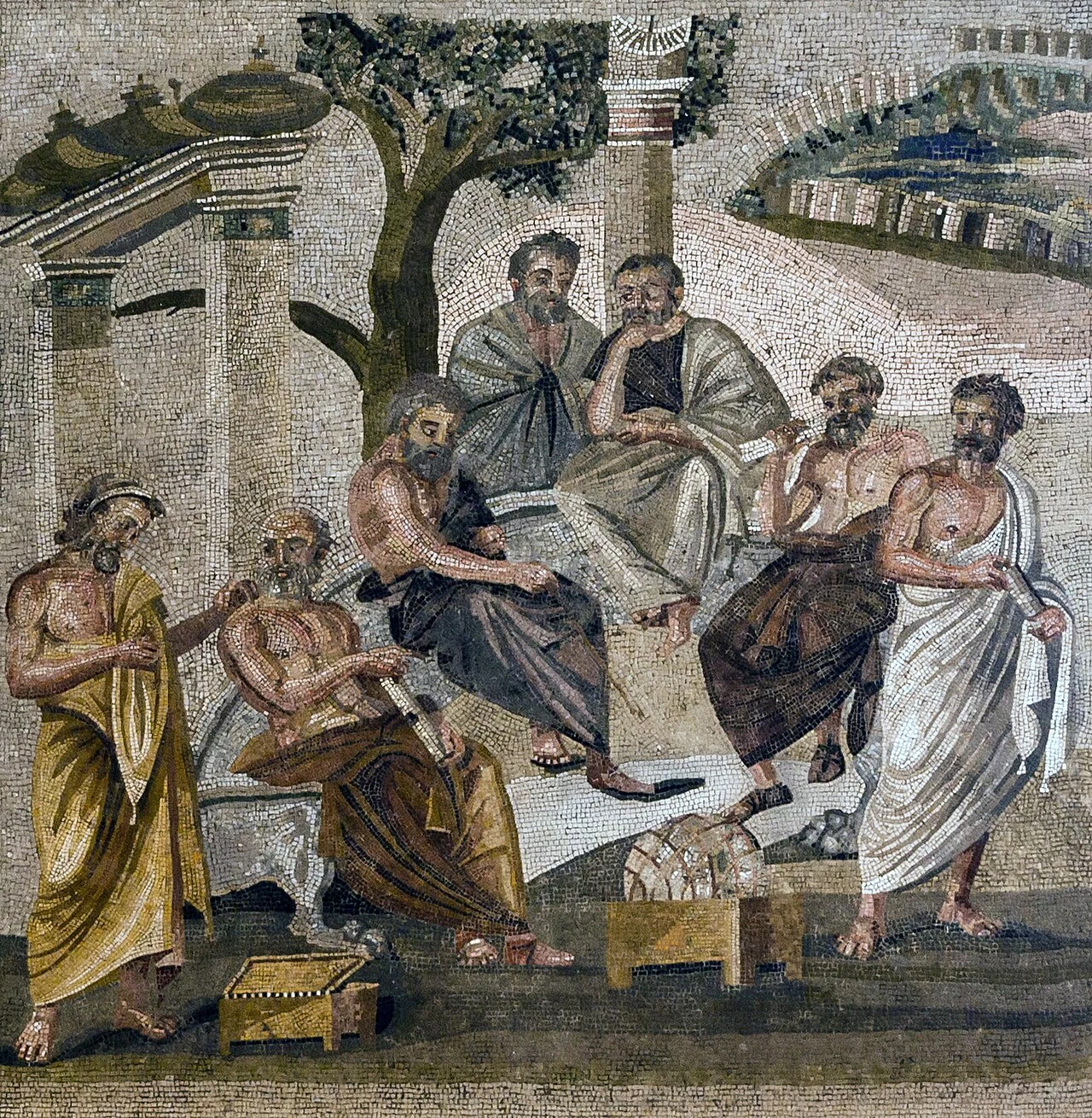
Mosaic depicting Plato's Academy
Civilization I

Athens

Trained the Mind

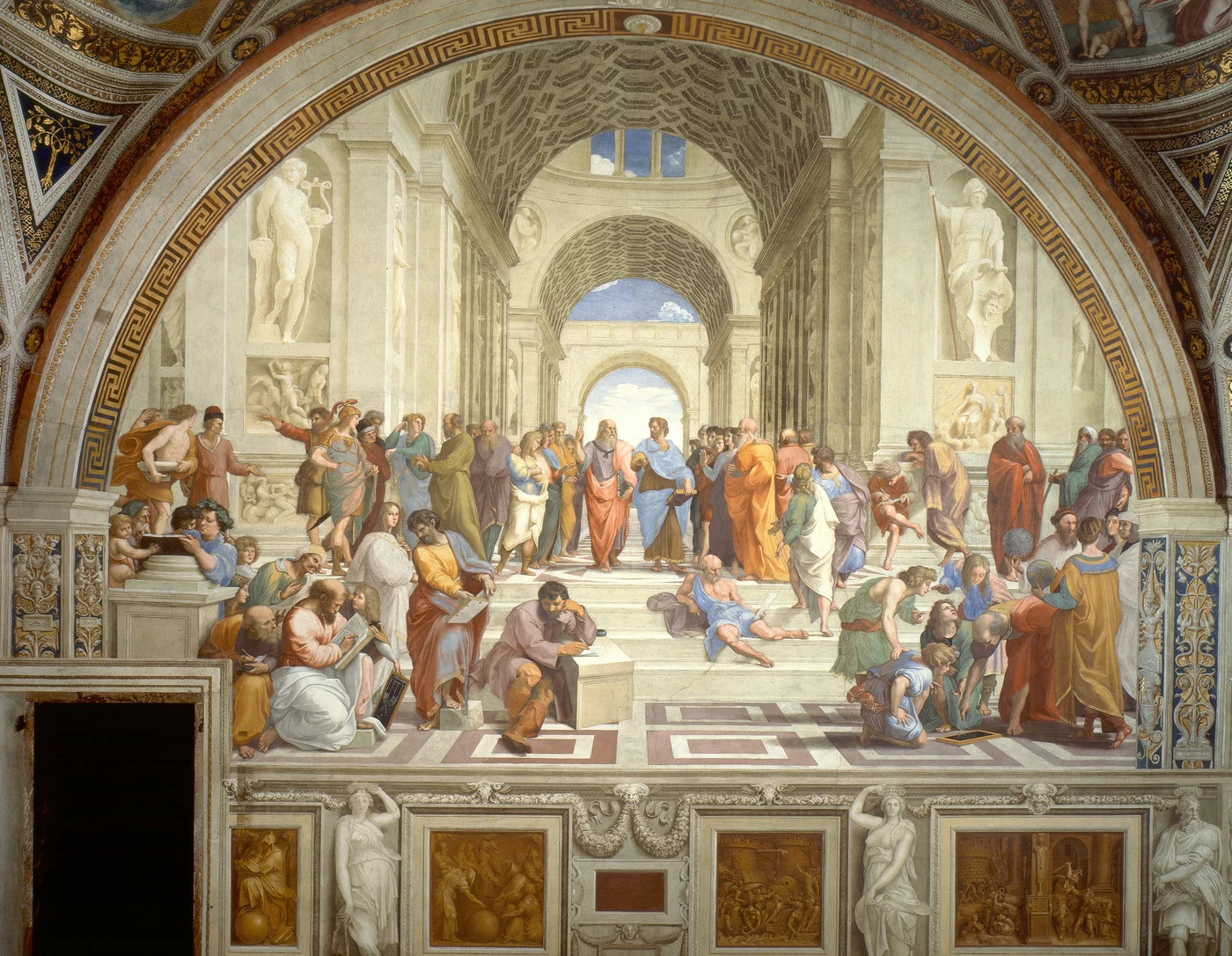
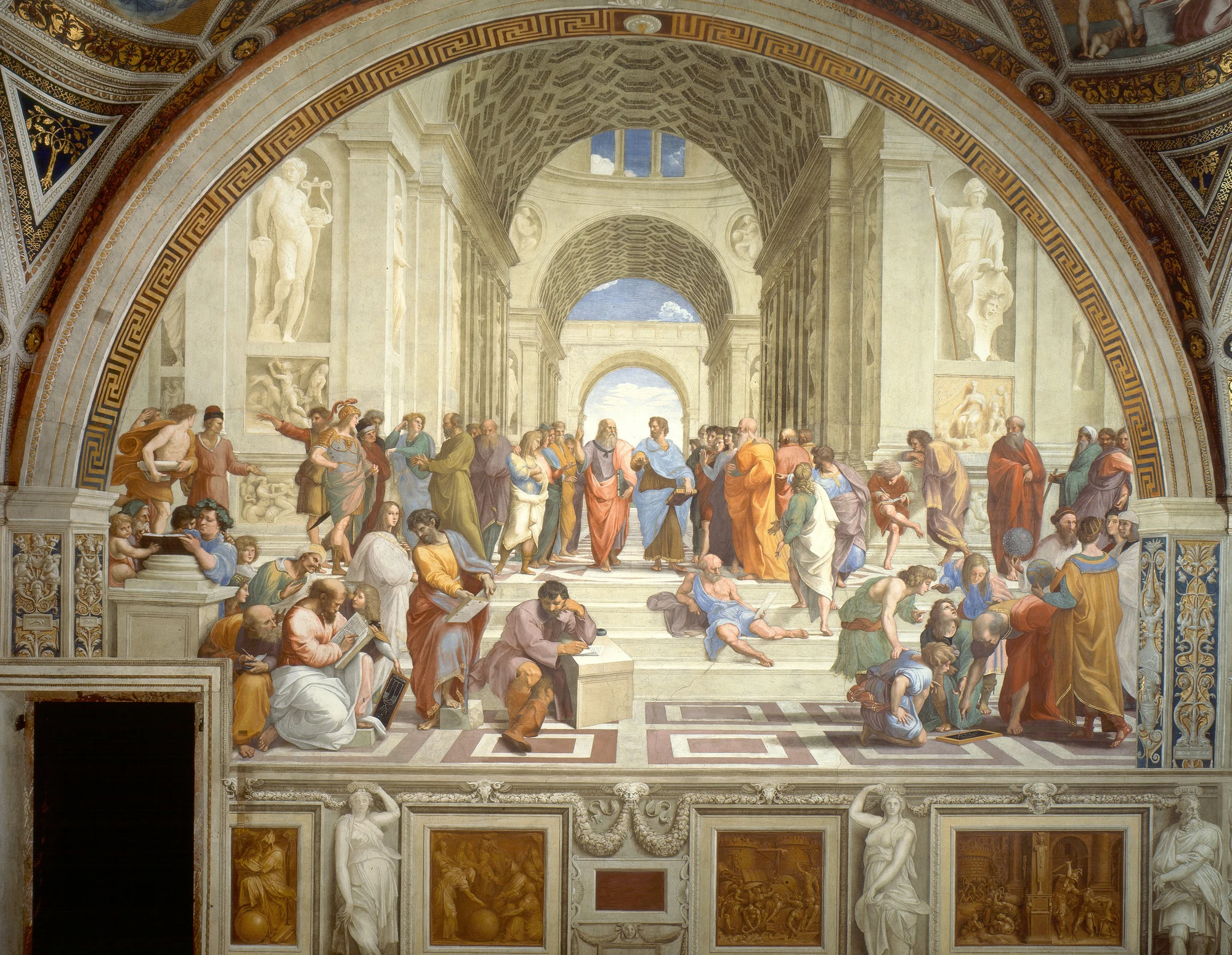
Athens gave us paideia — the total formation of the person through philosophy, literature, mathematics, and rhetoric. Plato founded the Academy. Aristotle named the categories of thought we still use. Socrates taught us that the unexamined life is not worth living.

The School of Athens by Raphael
Civilization II

Rome

Shaped the Character

Rome taught duty, law, rhetoric, and public virtue. Cicero and Quintilian gave the arts of language their fullest expression — the tradition that the medieval world would name the trivium. The Roman citizen was expected to serve the republic, speak well, and die with honor.

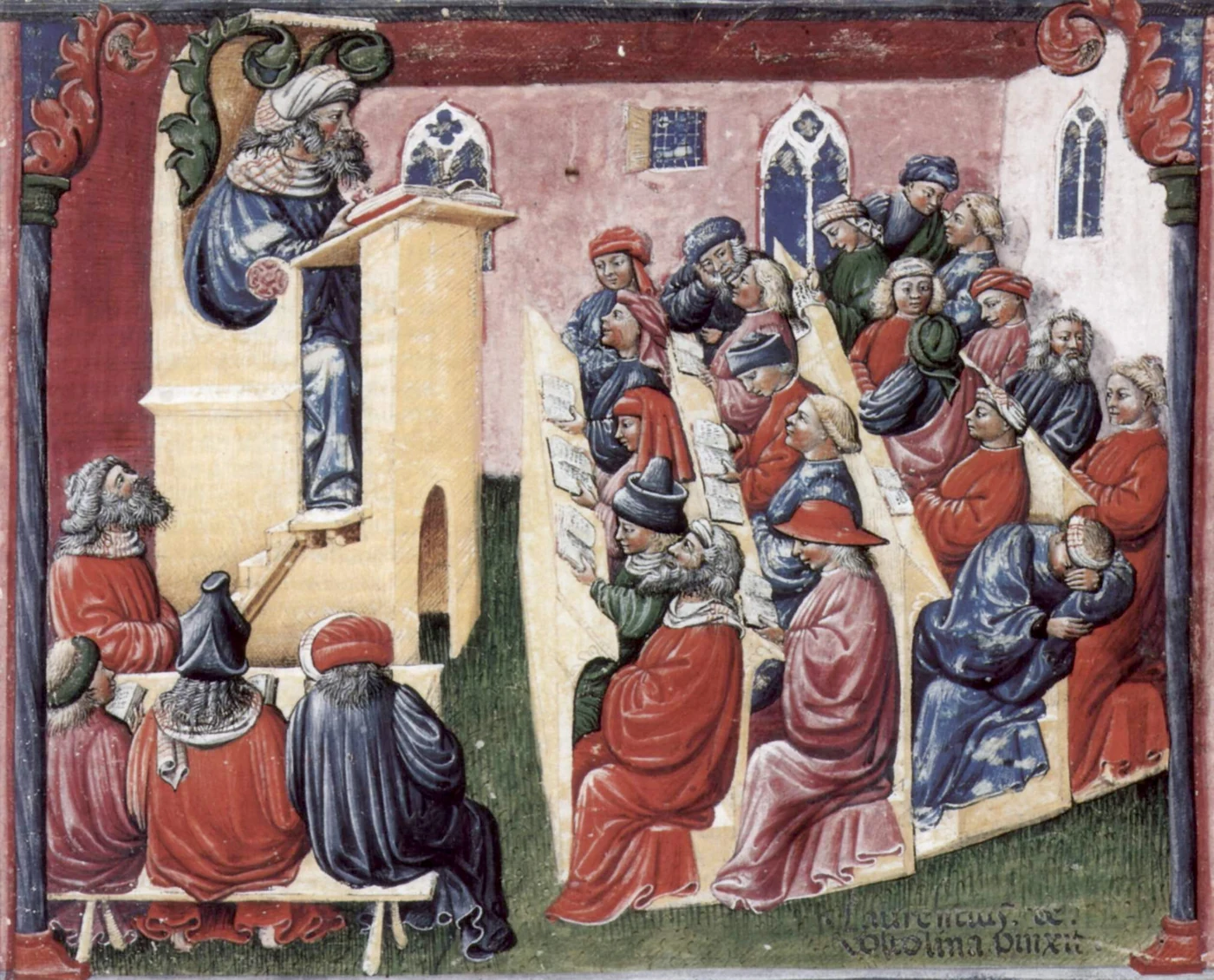
Medieval university lecture
Civilization III

Jerusalem

Formed the Soul in Worship and Moral Law

Jerusalem formed the soul. The Hebrew tradition gave the West its moral law, its theology of the person, and its conviction that every human being bears the image of God. Without Jerusalem, Athens produces clever sophists and Rome produces efficient tyrants. Jerusalem is the conscience of the classical inheritance.

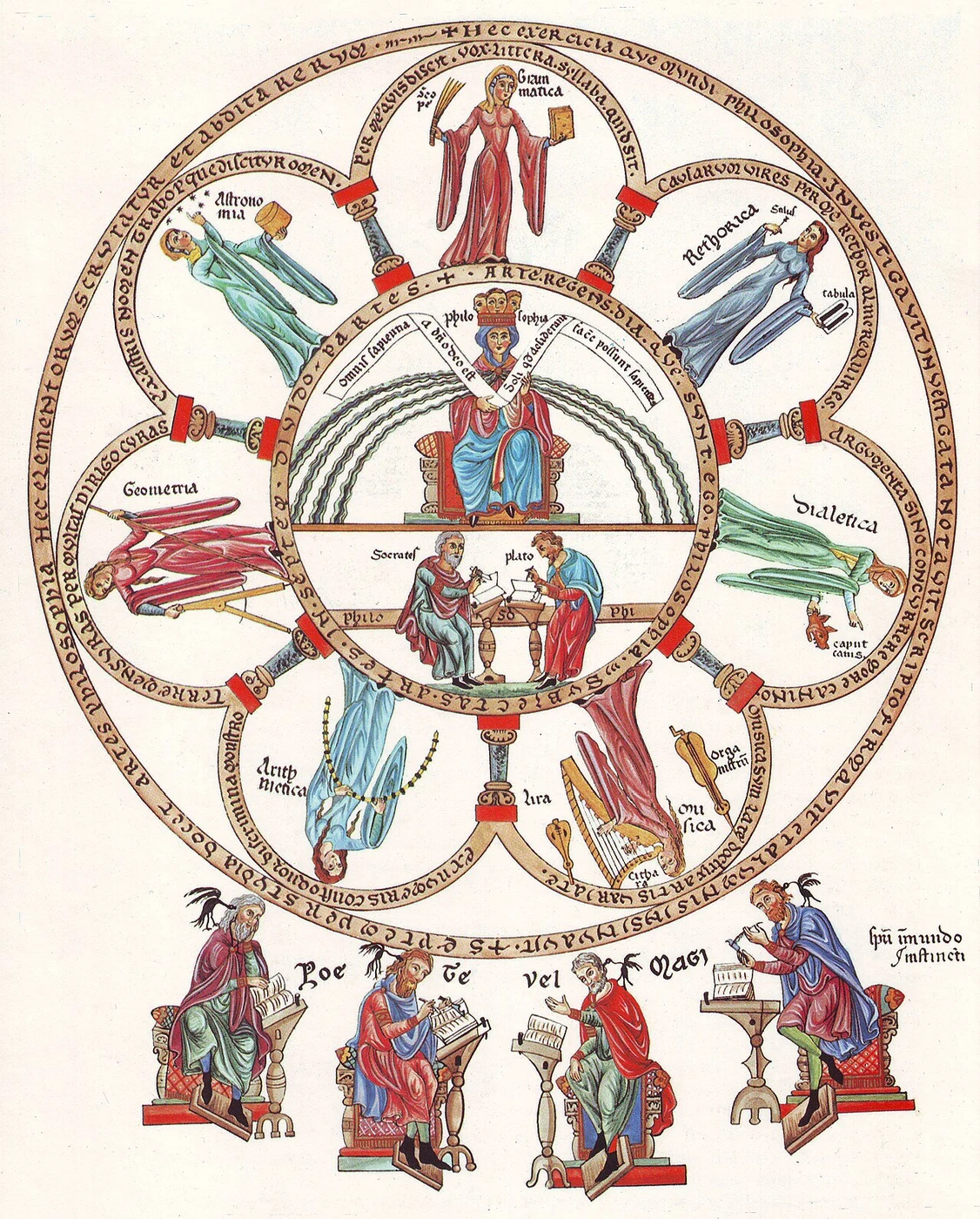
Hortus Deliciarum — the Seven Liberal Arts
Civilization IV

Christendom

United the Inheritance

Christendom — the medieval Church — took Athens, Rome, and Jerusalem and built the university, the hospital, and the cathedral. It placed the seven liberal arts (the trivium and quadrivium) at the center of every school and theology at the summit. For a thousand years, this was education. Thomas Aquinas taught that grace perfects nature rather than destroying it — and the liberal arts were the natural foundation on which grace could build.

Sophia gesturing toward text Sophia speaks

Sophia: Then the tradition was broken. The Reformation shattered the institutional unity of Christendom. The Enlightenment exalted individual reason over inherited wisdom. The rise of the modern research university in nineteenth-century Germany replaced formation with specialization. And the progressive education movement of the twentieth century — led by John Dewey and his followers — deliberately dismantled the classical curriculum in favor of vocational training and social adjustment. By 1940, the trivium and quadrivium had vanished from nearly every school in America.

The recovery began in 1947, when Dorothy L. Sayers delivered a lecture at Oxford titled The Lost Tools of Learning, published the following year. Sayers argued that modern education teaches children subjects but never teaches them how to learn. She proposed a return to the trivium — grammar, logic, and rhetoric — mapped to the natural development of the child. That lecture lit a slow fuse. In 1981, Douglas Wilson founded the Association of Classical Christian Schools. In 2003, the first Great Hearts academy opened in Arizona. Today, according to Arcadia Education, there are over 1,551 classical schools in America — 264 of them opened since 2020. The tradition was never dead. It was sleeping.

Movement III — What We Were Taught

The Quintivium — Five Arts of the Human Person


Marcus Marcus speaks

Marcus: In eighth grade, we began Vitae Formation — and for the first time, I studied my own body the way I had studied Homer: as something to be read, not just used. The Trivium taught me to think. The Quadrivium taught me to see. The Quintivium taught me to live — in my body, with my conscience, before my God.

The Quintivium is the five arts of the human person: Body, Mind, Ethics, Theology, and Politics. It extends the seven liberal arts with five more — because the classical tradition always knew that the purpose of education was not merely to produce a learned mind, but to form a whole human being. Every week of Vitae Formation reached into anatomy, ethics, theology, movement, and prayer at once.

Sophia: Dr. Dana Rodriguez wrote the curriculum we studied, and she is also the physician our families see. A question from the textbook could become an appointment the same week. That is what makes Vitae different from every health class in America: the founder is the clinician, the clinician is the curriculum author, and the classroom and the clinic are run by the same hands.

By junior year, I could trace the nervous system, defend the natural law, explain the theology of the body, and articulate why the Christian understanding of the human person is not a constraint but a liberation. The Quintivium did not teach me rules about my body. It taught me to hear what a body is saying.

ΛΟΓΟΣ Logos — The Appeal to Reason

Aristotle taught that the strongest persuasion comes from the argument itself. Now we lay out the structure of what we learned.

Click for Aristotle's definition
Movement IV — The Three Arts of Language

The Trivium


Sophia: The Greek word paideia means the total formation of the person. It is the word St. Paul uses in Ephesians 6:4 when he tells fathers to raise their children in the discipline and instruction of the Lord. The Trivium is the first half of that formation: the three arts of language that teach a student to learn anything.

Augustine in His Study by Botticelli
Art I

Grammar

The Art of Knowledge

Grammar is the stage of collecting: facts, names, dates, vocabulary, Latin paradigms, poems committed to memory, the books of the Bible, the bones of the skeleton. A child in the grammar stage absorbs joyfully and retains effortlessly. We filled our minds before we learned to question them.

Cicero Denounces Catiline by Maccari
Art II

Logic

The Art of Reasoning

Logic is the stage of questioning. By middle school, we wanted to know why. Our teachers handed us formal logic: syllogisms, fallacies, the structure of valid argument. We learned to detect contradictions in our own thinking before we detected them in others. This is the hardest and most humbling of the three arts.

The School of Athens by Raphael
Art III

Rhetoric

The Art of Expression

Rhetoric is the stage of expression: learning to communicate truth persuasively, beautifully, and with responsibility. This very thesis is a rhetorical exercise. We are not merely stating facts; we are defending a way of life. Classical rhetoric teaches that the ability to speak well carries a moral obligation to speak truthfully.

Movement V — The Four Arts of Number

The Quadrivium


Sophia: The Quadrivium teaches the student to see the mathematical order embedded in creation — number in the abstract, number in time, number in space, and number in motion.

Typus Arithmeticae from Margarita Philosophica
Art IV

Arithmetic

Number in Itself

Pure number: the properties of integers, ratios, and the relationships that Pythagoras called the language of the cosmos. Arithmetic is the foundation of all quantitative reasoning.

Euclid Elements first printed edition 1482
Art V

Geometry

Number in Space

Euclid's Elements taught us to prove that truth has a structure. No one who has worked through a geometric proof can ever again believe that truth is merely opinion. Geometry is where the mind first touches certainty.

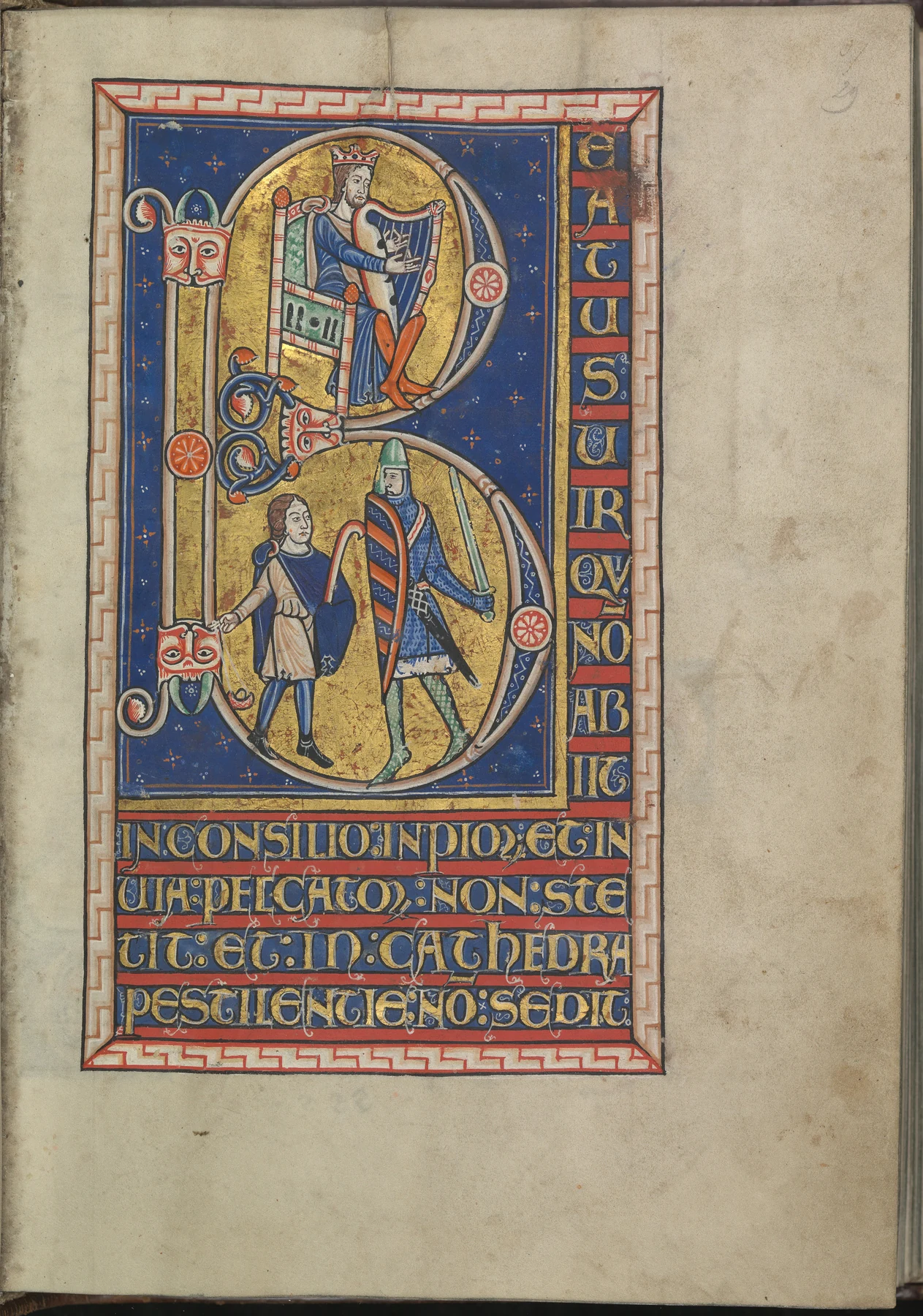
King David with Harp from the Eleanor Psalter
Art VI

Music

Number in Time

The ancients understood music as mathematics made audible. Harmony, rhythm, and proportion — these are not decorations. They are the signature of order in a universe that could have been chaos but was not.

Ptolemaic cosmological diagram by Bartolomeu Velho
Art VII

Astronomy

Number in Motion

Astronomy is the crown of the Quadrivium: the study of the heavens, the motions of the planets, the mathematics of the cosmos. It lifts the eyes from the textbook to the sky and asks the oldest human question: what is all of this for?

Movement VI — The Great Conversation

The Great Books


Sophia Sophia speaks

Marcus: Homer showed me courage in its oldest form — Hector choosing to face Achilles outside the walls of Troy, knowing he would die. Virgil showed me piety: Aeneas carrying his father on his back through a burning city. Plato's Republic made me argue with my own soul about justice for three months straight. Dante walked me through hell and purgatory and paradise and showed me that every sin is a disordered love and every virtue is love rightly ordered.

And woven through all of it was Scripture. Genesis taught us that the world was made by a God who called it good. The Psalms taught us to pray. Job taught us that suffering is not always punishment. The Gospels taught us that God himself entered the conversation — not as a philosopher but as a carpenter's son from Nazareth, and that He is the ordering principle of all reality.

Sophia: The reading list of a classical education is not a museum. It is a living conversation: Homer speaks to Virgil, Virgil speaks to Dante, Dante speaks to Shakespeare, Shakespeare speaks to Dostoevsky, and all of them speak to us. We do not read these books to admire the past. We read them because they ask questions that are still unanswered — What is justice? What is courage? What does it mean to be human? — and because every generation must answer them again.

Movement VII — By the Numbers

The Evidence


Sophia: A classical education does not merely form the soul. It also produces measurable results. The numbers are not the point — virtue is the point — but the numbers speak.

180–220 Points above the national SAT average, consistently, across Great Hearts academies. Great Hearts Results
98% College attendance rate among Great Hearts graduates. Great Hearts Results
$77.1M Merit scholarships earned by the Great Hearts Class of 2025. Great Hearts Results
31% Percentage of American eighth graders proficient in reading on the most recent NAEP assessment. NAEP — Nation's Report Card
1,551 Classical schools operating in America as of 2024 — a movement, not a niche. Arcadia Education Market Analysis
264 New classical schools opened since 2020 alone. Heritage Foundation

Sophia: Philosophy and classics majors consistently rank among the highest LSAT scorers, according to LSAC data. This surprises no one who has studied the liberal arts: the LSAT tests exactly the skills that a classical education develops from childhood — close reading, logical reasoning, and the ability to construct and evaluate arguments.

Movement VIII — What We Are Prepared For

Every Vocation, Every Station


Marcus: A classically educated student who has also studied Vitae Formation does not just know anatomy — she knows why the body matters. We are prepared for any vocation that requires us to think clearly, speak truthfully, and care for human beings.

Jan Steen, The Doctor's Visit
Vocation

In Medicine

They heal with knowledge and compassion, treating the patient as a person made in the image of God, not as a collection of symptoms.

Cicero Denounces Catiline
Vocation

In Law

They fight for justice, not just legality. A student trained in natural law and rhetoric sees that the law must serve something higher than itself.

Leonardo da Vinci, Vitruvian Man
Vocation

In Science

They investigate creation with wonder and rigor, knowing that the universe is ordered and that the order is discoverable.

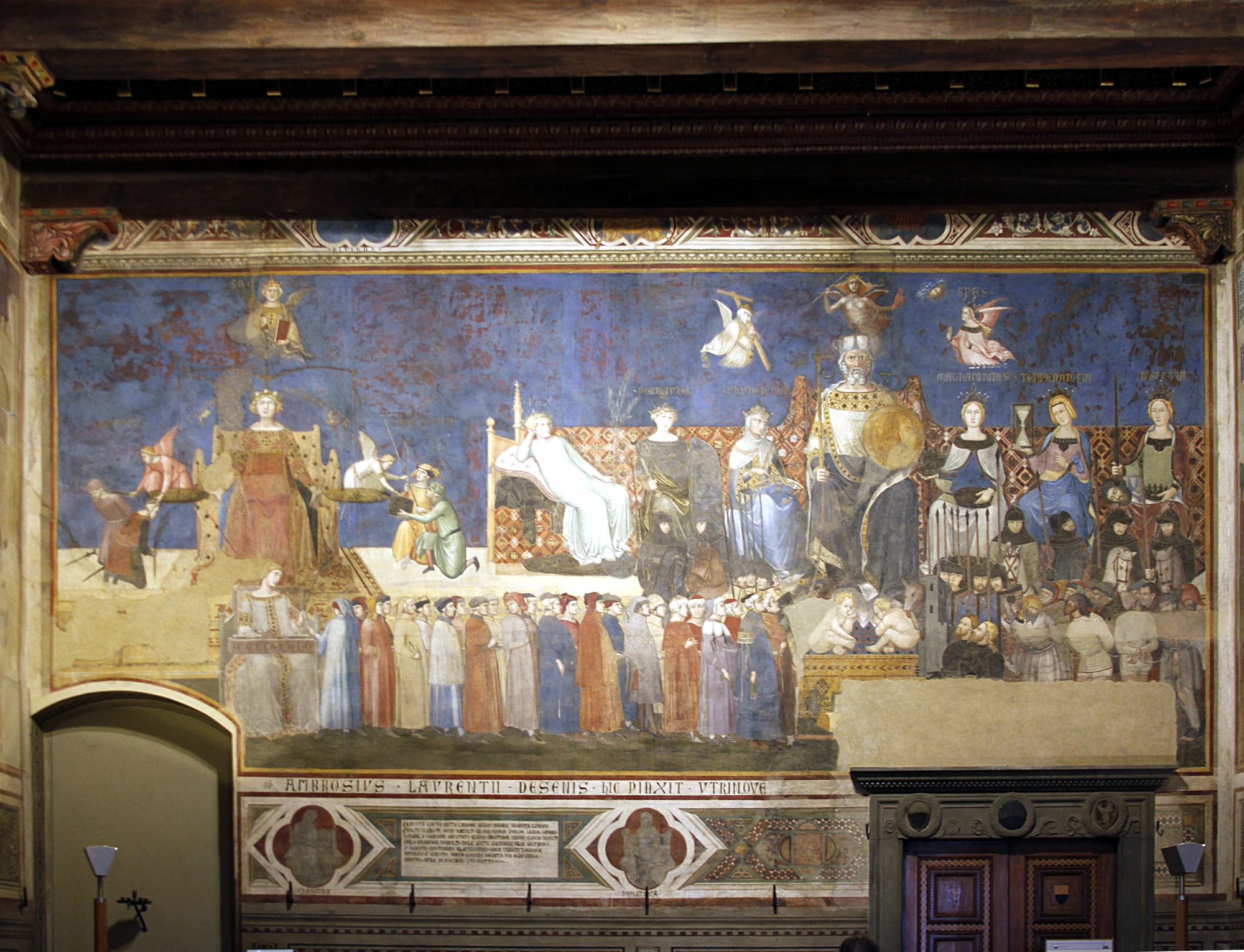
Lorenzetti, Allegory of Good Government
Vocation

In Business

They lead with integrity because they were trained in virtue before strategy. Prudence, justice, and temperance are better business partners than ambition alone.

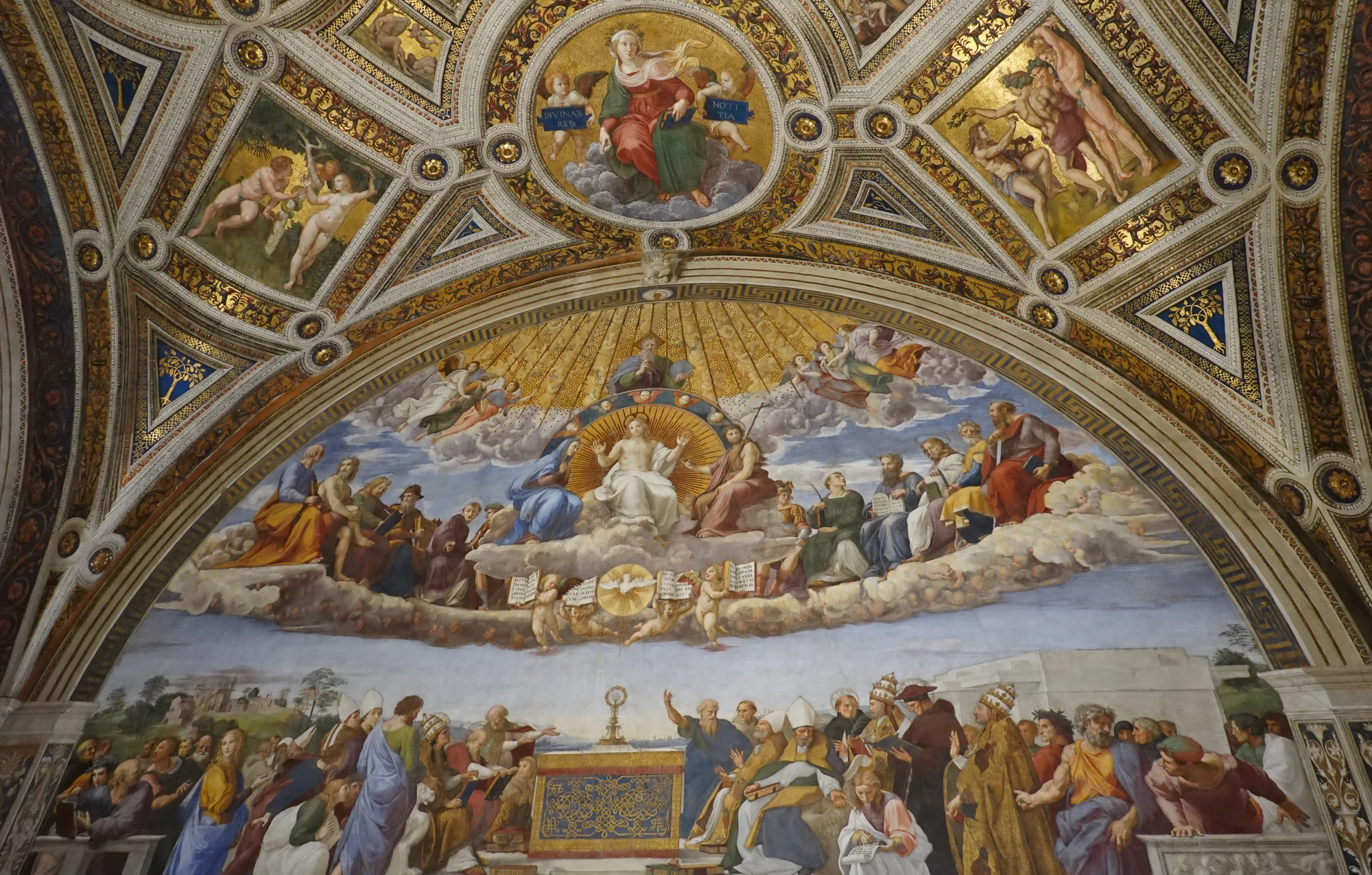
Raphael, Disputation of the Holy Sacrament
Vocation

In the Home

They raise the next generation with wisdom and grace. Parenthood is the most consequential vocation on earth, and classical education treats it as such.

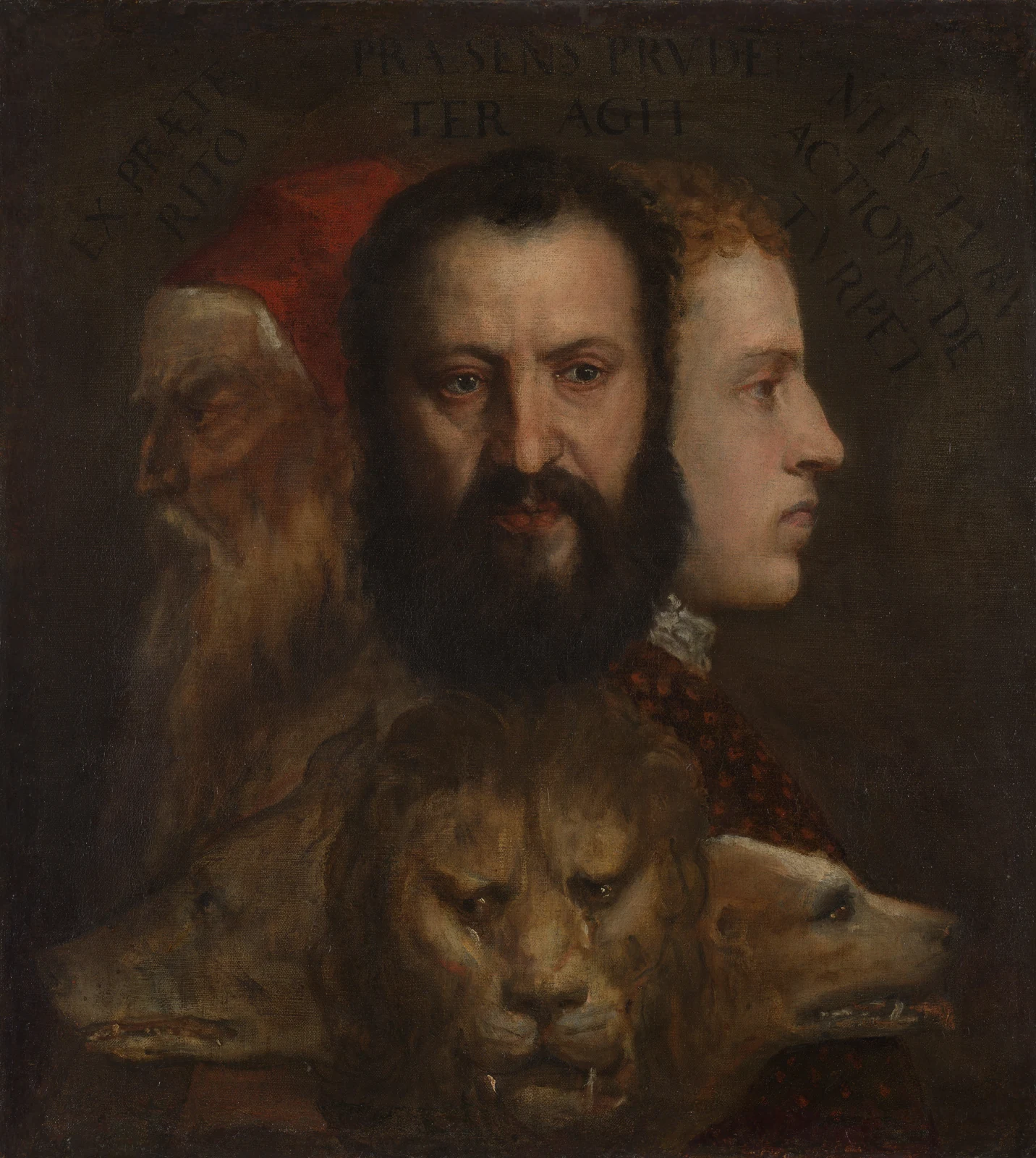
Titian, Allegory of Prudence
Vocation

In Media

They pursue truth over popularity. A student trained in rhetoric knows how language can illuminate or deceive — and chooses illumination.

Sophia: I am prepared for medical school, for motherhood, for ministry — for any vocation that requires me to care for human beings. That is what Vitae Formation did. It did not narrow my options. It widened them by giving me a foundation deep enough to support any calling.

Movement IX — Questions We Get Asked

The Objections


A good thesis does not hide from its critics. Here are the questions we hear most often — and our honest answers.

Is classical education just nostalgia for the past?+
Marcus: No. Nostalgia is a longing for something lost. We are not longing — we are inheriting. The liberal arts are not relics; they are tools. Grammar, logic, and rhetoric are as useful today as they were in ancient Athens. Most of my classmates code as well as they conjugate. The difference is that we also know why the code matters and what it is for.
Does classical education prepare students for the modern economy?+
Sophia: Yes — better than most alternatives. A 98% college attendance rate, $77.1 million in merit scholarships from a single graduating class, and SAT scores 180–220 points above the national average are not signs of an impractical education. Philosophy and classics majors consistently rank among the highest LSAT scorers. The modern economy needs people who can think, adapt, communicate, and lead. Those are exactly the skills a classical education develops.
Is this really education, or is it indoctrination?+
Marcus: Indoctrination tells you what to think. Classical education teaches you how to think — and then hands you the hardest books in the Western tradition and dares you to argue with them. We read Marx alongside Aquinas. We read Nietzsche alongside Augustine. Our teachers did not protect us from difficult ideas; they taught us to meet them with charity and rigor. If that is indoctrination, then Socrates was the first indoctrinator.
Can an online school really deliver classical education?+
Sophia: Socrates did not need a building. He needed a student, a question, and a willingness to follow the argument wherever it led. Our classrooms are virtual, but our Socratic seminars are live, our teachers are present, and the curriculum is the same proven Great Hearts model that has been producing exceptional results in brick-and-mortar schools for two decades. The classical tradition is portable. It travels wherever the teacher and the student meet.
Why include faith? Not everyone is Christian.+
Marcus: Because the tradition we inherit is deeply Christian, and we believe it is more honest to name that than to pretend otherwise. Jerusalem is one of the four civilizations. The medieval university was a creation of the Church. The Great Books include Genesis, the Psalms, and the Gospels alongside Homer and Plato. We welcome every family — Christian or not — who wants a formation in the liberal arts. But we do not hide the faith that animated the tradition. That would be like studying Renaissance art and refusing to mention Christ.
What about students with learning differences?+
Sophia: Every person bears the image of God. Classical education is not a sorting mechanism; it is a formation in what it means to be human. We serve students with learning differences through individualized support, flexible pacing, and the conviction that every child deserves access to the Great Books, the Trivium, and the full richness of the tradition. Formation is not a competition. It is a gift extended to every student we serve.
ΠΑΘΟΣ Pathos — The Appeal to the Heart

Aristotle taught that the speaker must help the audience feel the weight of what is true. Now we speak from the heart.

Click for Aristotle's definition
Movement X — Virtue, Not Just Knowledge

The Transcendentals


Marcus Marcus speaks

Marcus: A classical education does not end at knowledge. It ends at virtue. And virtue is not a list of rules — it is a way of seeing. The medieval tradition taught that all of reality participates in three transcendental properties of being: Truth, Goodness, and Beauty. Every subject we studied was ordered toward one or more of these transcendentals.

Mathematics taught us that truth has a structure you can prove. Literature taught us that goodness is visible in the choices characters make under pressure. Music and art taught us that beauty is not decoration but revelation — the visible form of order in a universe that could have been chaos. The Transcendentals are not abstract. They are the lens through which a classically educated person sees everything.

Marcus: Virtue is what happens when a person has spent thirteen years practicing truth-telling, seeking the good, and being trained to recognize beauty. It is not something we were told to be. It is something we were formed to become — slowly, by reading great books, by studying great art, by praying every morning, by being held accountable to teachers who loved us enough to demand excellence.

Movement XI — Why Faith and Reason Are Not Enemies

Christ at the Center


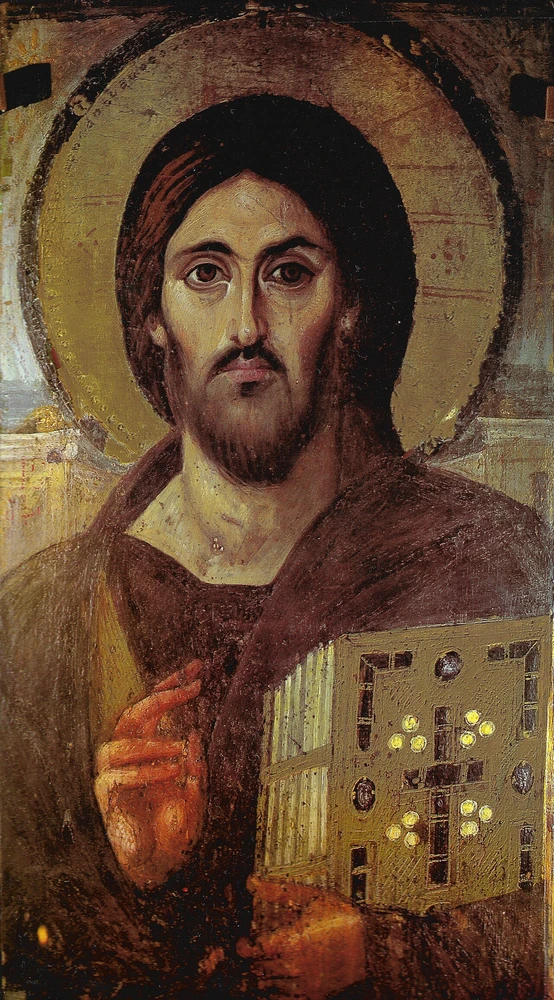
Christ Pantocrator, 6th century encaustic icon, St. Catherine's Monastery, Sinai

Marcus: Christ is not confined to theology class. He is the Logos, the ordering principle of all reality. When we studied mathematics, we studied the order He placed in creation. When we read Homer, we read a story about courage and honor that was fulfilled and surpassed in the life of a Galilean carpenter who laid down His life for His friends. When we practiced rhetoric, we practiced the art that St. Paul used to bring the Gospel to the Greek world.

Faith and reason are like two wings on which the human spirit rises to the contemplation of truth. That is not sentimentality — it is the conviction of twenty centuries of Christian intellectual life. The university was born in the Church. The hospital was born in the Church. The liberal arts were preserved by the Church. To remove Christ from the classical tradition is not to make it neutral; it is to make it incomplete.

Sophia: This is the fullest argument we make: that classical education, rightly understood, is an education in the image of God. The Trivium teaches the mind to seek truth. The Quadrivium teaches the eyes to see order. The Quintivium teaches the body to live with reverence. And all of it — every book, every proof, every prayer — is held together by the conviction that the universe is not random, that the human person is not an accident, and that the God who made all things is the same God who became man and dwelt among us.

You do not need to share our faith to benefit from the liberal arts. The arts belong to everyone — they are part of the common inheritance of the human race. But we believe they point toward their ultimate source. And we would not be honest if we hid that from you.

The fear of the Lord is the beginning of knowledge; fools despise wisdom and instruction.
Proverbs 1:7 (RSV-CE)
We shall not cease from exploration
And the end of all our exploring
Will be to arrive where we started
And know the place for the first time.
T. S. Eliot — Four Quartets
Peroration

We Rest Our Case


Marcus Sophia

Marcus & Sophia: We were given thirteen years of grammar, logic, rhetoric, arithmetic, geometry, music, astronomy, great books, Scripture, prayer, and a curriculum that taught us to read our own bodies as texts written by God. We did not earn any of this. We received it. And the only fitting response to a gift this large is to defend it — not because it needs our protection, but because gratitude demands that we speak.

This thesis is our defense. The tradition is old, the data is strong, and the education is real. If you are looking for a school that takes the whole child seriously — body, mind, and soul — then you have found it.

Discere ut Vivere — To Learn in Order to Live

Begin the Tradition

Enroll today for the 2026–27 school year, or request information about our classical K–12 curriculum. The tradition is older than any living institution in the Western world. The only question is whether your family will be part of it.

Enroll for 2026–2027 Info
Classical K–12ESA Approved · Enrolling Now
Apply Now