Beauty as a Pillar of the Classical Curriculum
Truth, Beauty, and Goodness are the three transcendentals that have anchored classical education for more than two thousand years. At Virtualis, a Christian classical academy rooted in the Catholic intellectual tradition, the fine arts are not enrichment or elective — they are how children learn to see, hear, and reverence the beauty woven into creation. Following the Great Hearts model, art and music are taught every year from kindergarten onward.
In the elementary grades, every Virtualis student studies Art and Music Theory & Performance as core subjects. Children paint still lifes in the style of Cézanne, study musical notation and harmony, sing folk music in choral arrangements, and memorize and recite poetry aloud as part of normal classroom life. In middle school, studio art and music continue alongside Latin. In high school, formal Music coursework in 9th and 10th grade is followed by Studio Art and Drama in 11th and 12th — the same sequence published by Great Hearts upper schools.
The fine arts at Virtualis are not a break from rigorous academics. They are rigorous academics. Drawing teaches observation. Singing teaches discipline. Memorizing poetry teaches the architecture of language. Studying a great work of music or art teaches the same proportional reasoning a student meets later in geometry. Beauty trains the mind no less than logic does.
Why Beauty? The Case Every Parent Should Hear
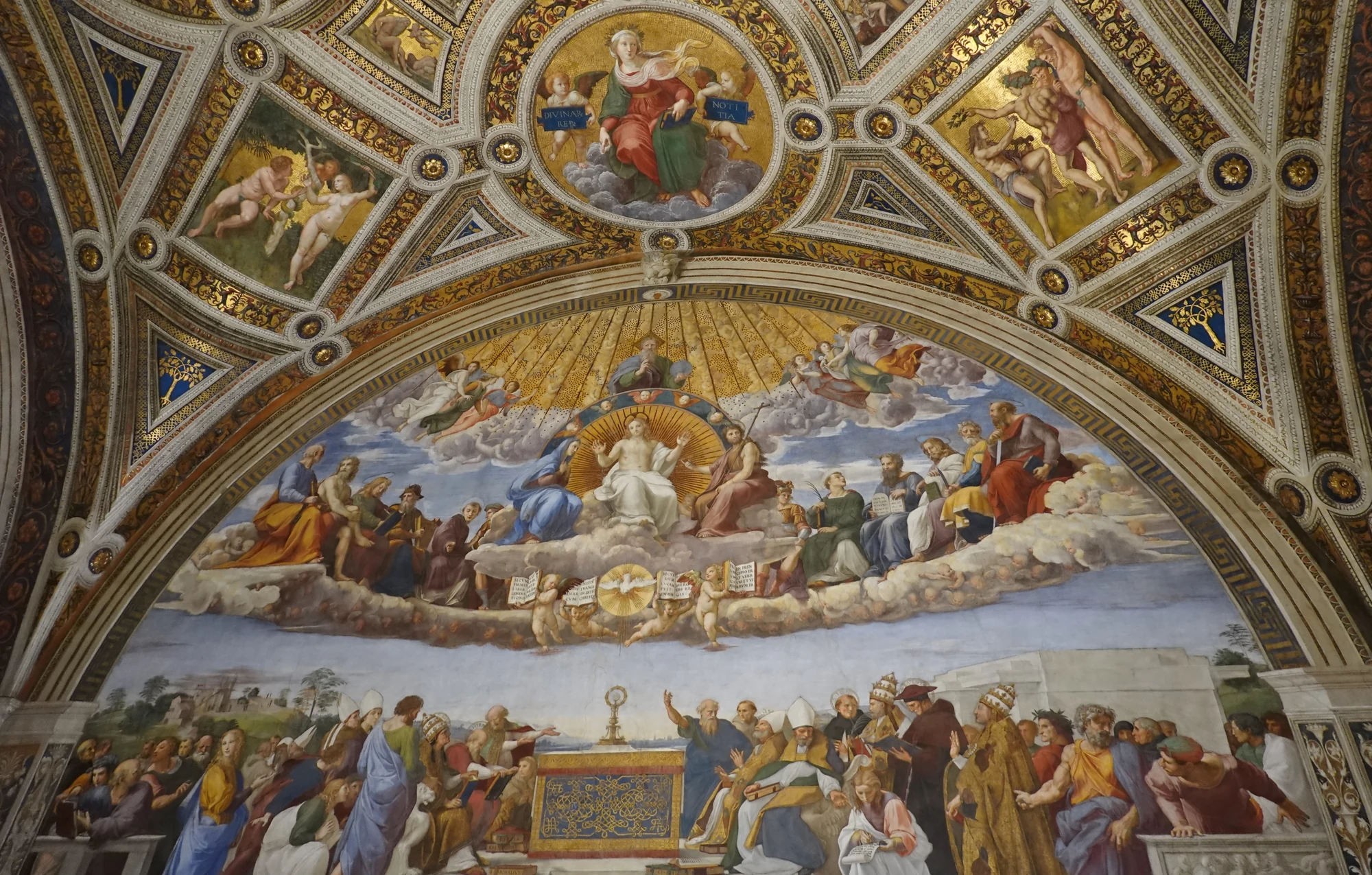
Beauty Is Not a Luxury — It Is One-Third of Reality
The classical tradition names three transcendentals — three attributes of all being that reflect the nature of God himself: truth (verum), goodness (bonum), and beauty (pulchrum). They are not three separate things. They are three faces of the same reality. A thing that is truly true is also good and beautiful; a thing that is truly beautiful is also true and good. To remove any one of the three is to cripple a child’s understanding of the world by exactly one-third.
Hans Urs von Balthasar, the great Swiss theologian, devoted the first volume of his masterwork The Glory of the Lord (1961) to a devastating warning: a civilization that abandons beauty will inevitably lose its grip on truth and goodness as well. Beauty is not decoration applied after the serious work is done. It is the radiance of being itself, and a culture that can no longer perceive it is a culture going blind. Every modern school that cuts art and music to make room for test prep is proving Balthasar right in real time.
Beauty as the Visible Face of the Good
Plato understood beauty as the most accessible of the transcendentals — the one that reaches us first, through the senses, before the intellect has time to analyze. In the Symposium, he describes the soul’s ascent from the beauty of a single body to the beauty of all bodies, then to the beauty of the soul, then to the beauty of knowledge, and finally to Beauty itself — the form that all beautiful things participate in. Beauty is the doorway. A child who has never been taught to see beauty, to hear it in music, to feel it in a line of poetry, has been locked out of the first room in the house of truth.
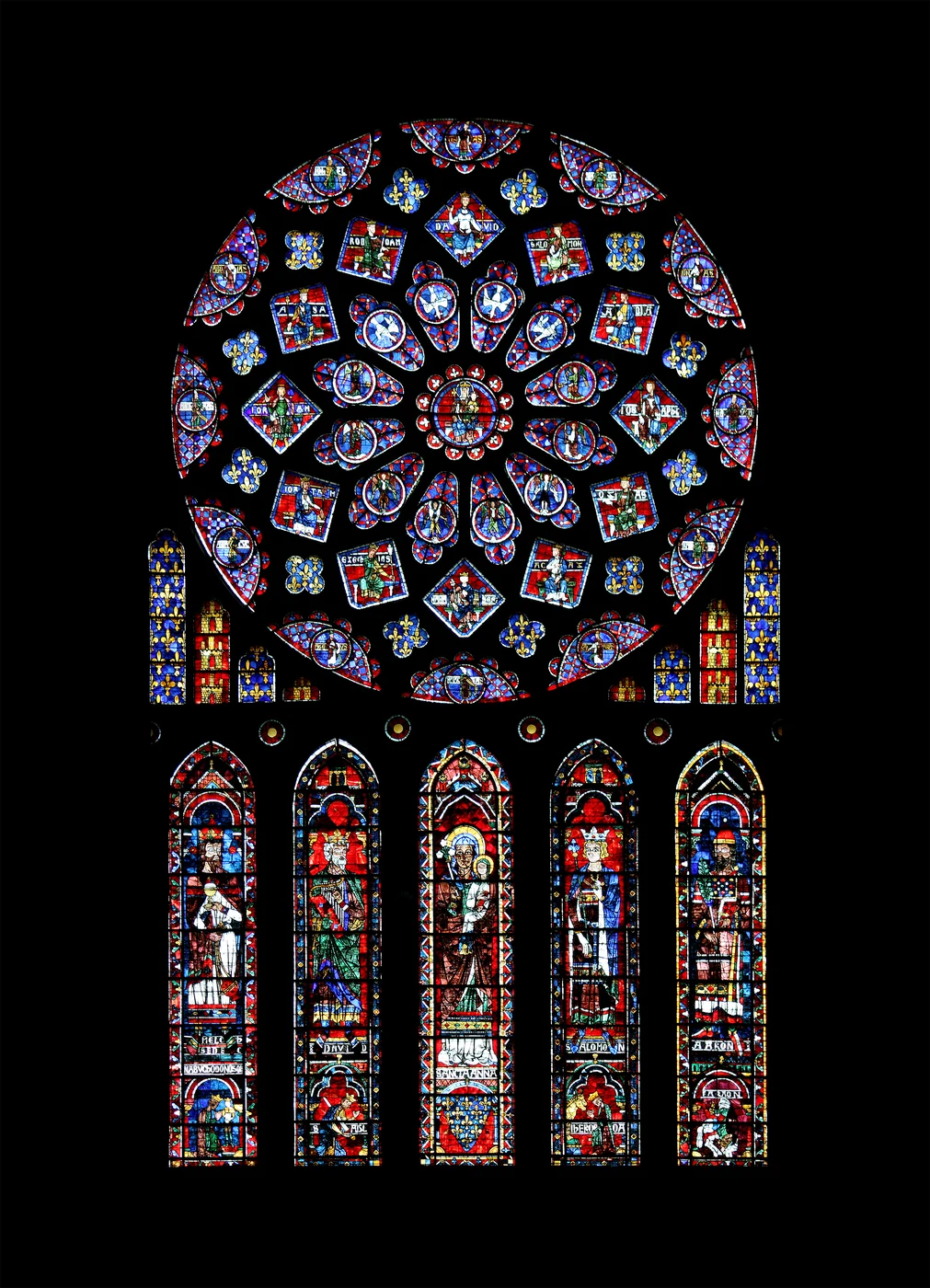
Pope Benedict XVI echoed Plato across two millennia when he described beauty as a “pathway to God” — a wound inflicted by the real, an arrow that strikes the heart and opens it to what is beyond itself. Benedict argued that the encounter with beauty is often more convincing than any rational argument, because it bypasses the defenses of skepticism and speaks directly to the soul. A child who stands before Chartres Cathedral, who hears a Bach fugue, who memorizes Hopkins or Dickinson, has received a kind of evidence that no syllogism can provide.
The Vocabulary of Perception
A child who learns to draw from observation learns to see — to notice the angle of a shadow, the weight of a line, the relationship between foreground and background. A child who learns to sing learns to listen — to hear the interval between two notes, to feel the pull of a resolution, to hold a part while another voice moves. A child who memorizes and recites poetry learns the architecture of language — meter, stress, caesura, the way a sentence can turn on a single word. These are not ornamental skills. They are perceptual disciplines, and they transfer to every other area of learning. The student who can see proportion in a still life can see proportion in a geometric proof. The student who can hear dissonance in a chord can hear a false note in an argument.
This is why Great Hearts Academies — and Virtualis with them — teach art and music every year from kindergarten onward. Not as enrichment. Not as a reward for finishing real work. As core curriculum, because the formation of perception is as serious as the formation of reason, and a student who cannot perceive beauty is a student who has been educated with one eye closed.
What This Means for Your Child
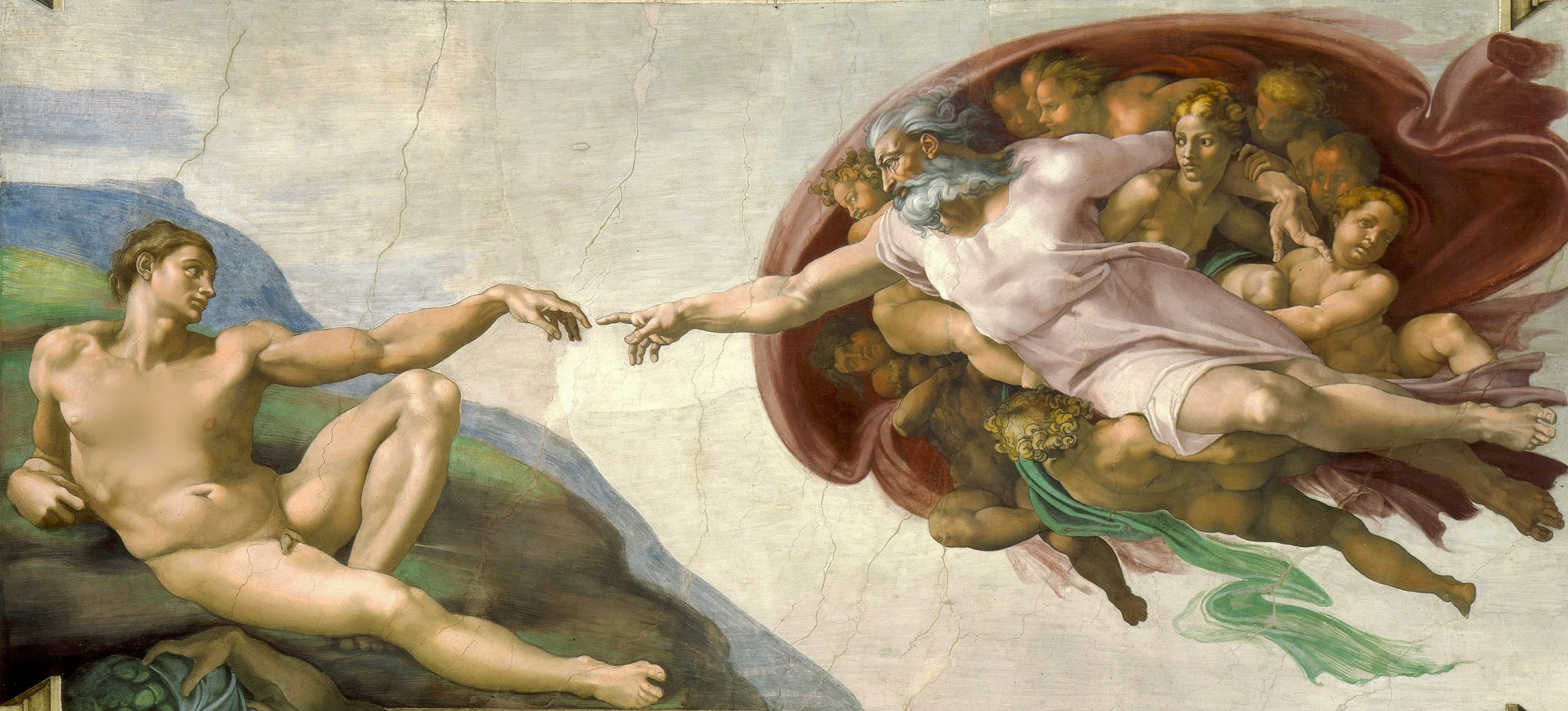
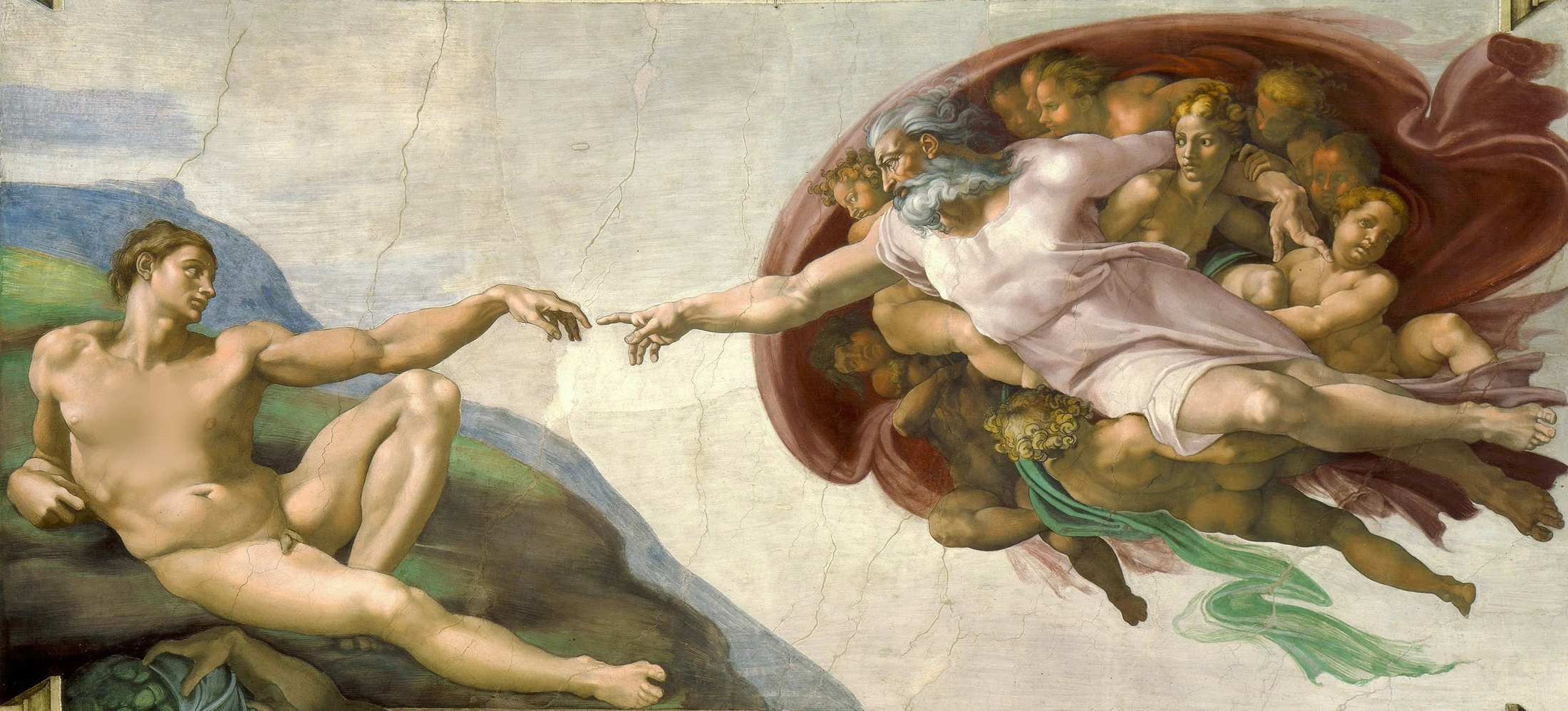
Your child will draw, paint, sing, recite, and encounter the greatest works of art and music the human race has produced — not in a once-a-week elective, but as a regular part of her education from kindergarten through twelfth grade. She will learn to see what Michelangelo saw in the human form, to hear what Bach heard in a fugue, to feel what Hopkins felt in a line of verse. She will be given the vocabulary to perceive goodness in the world — and to recognize its absence. That is not a luxury. That is the one-third of reality that most modern schools have decided to skip. We do not skip it.
What We Study & Perform
Representative artists, composers, poets, and playwrights our fine arts students encounter across thirteen years.
See, Hear, Recite
Grades K–5
- Still lifes in the style of Cézanne
- Children’s Book of Art — DK
- Folk songs & choral arrangements
- A Child’s Garden of Verses
- Peter and the Wolf — Prokofiev
- Christmas carols & Latin prayers
- Gregorian chant (listening)
- Bach, Mozart, Handel (listening)
Technique & Tradition
Grades 6–8
- Master studies (Rembrandt, Vermeer)
- Observational drawing & watercolor
- Music theory & harmonic analysis
- Two-part choral singing
- Shakespeare sonnets (recitation)
- Handel’s Messiah (listening)
- Beethoven symphonies (listening)
- Palestrina & sacred polyphony
Studio, Music, Drama
Grades 9–12
- Grade 9–10: formal Music (theory, history, performance)
- Grade 11: Studio Art (drawing & replication)
- Grade 12: Drama (voice, gesture, production)
- Master replication — Caravaggio, Velázquez
- The Western classical canon
- Dante, Milton, Hopkins (recitation)
- Co-curricular choir & ensembles
- Seasonal concerts & productions
Curriculum mirrors the Great Hearts upper-school fine arts sequence exactly: 9–10 Music, 11–12 Studio Art & Drama. Co-curricular offerings run all four years.
How We Teach the Fine Arts
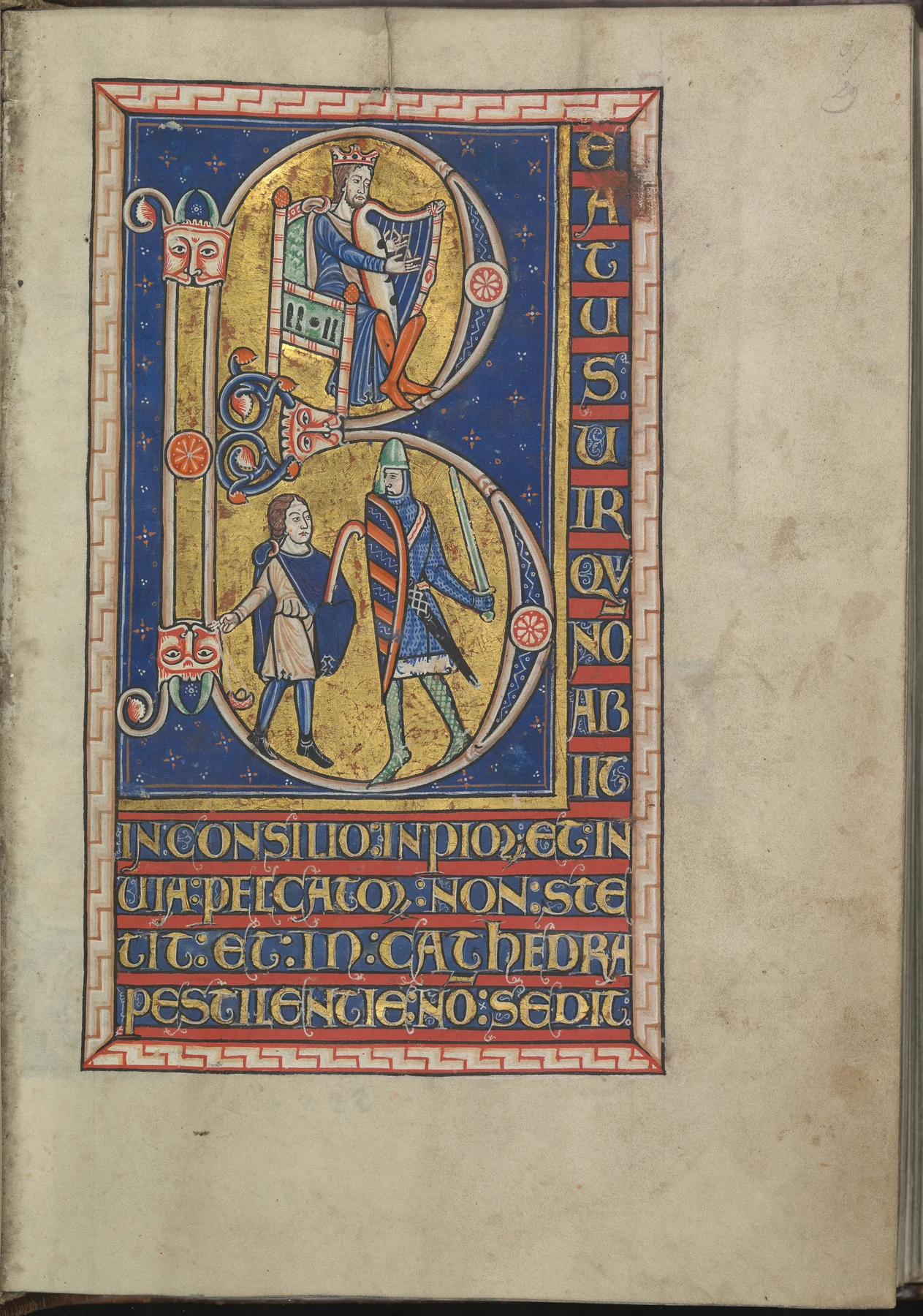
Live, Daily Practice
Children learn art and music the way they learn their mother tongue: through daily, sustained practice with a teacher who can correct, encourage, and model. Virtualis fine arts classes meet live with credentialed instructors. Recitation, sight-singing, and drawing-from-observation happen every week, not occasionally.
Imitation Before Innovation
The classical method begins with imitation of the masters. Following the published Great Hearts approach, students replicate master works as a means to practice how line communicates shape, form, and space. Reproducing a master copy teaches an artist to deconstruct a complicated work into simple shapes — the foundation of original creative work later on.
Integrated with the Trivium
Fine arts at Virtualis are not isolated electives. The art and music of each historical period illustrate the history students are reading. The Latin students are studying surfaces in the music of the Church. The proportions students observe in studio art reappear in geometry. Every discipline strengthens every other.
Performance and Exhibition
Throughout the year, students share what they have made. Choir concerts, art exhibitions, poetry recitations, and drama productions are normal parts of the school year — opportunities for students to offer their best work back to their families and to the school community.
Whatsoever things are true, whatsoever things are honest, whatsoever things are just, whatsoever things are pure, whatsoever things are lovely, whatsoever things are of good report — think on these things.— Philippians 4:8
Common Questions
Every Virtualis student studies Art and Music Theory & Performance every year from kindergarten through fifth grade, plus poetry recitation as part of normal classroom life. Middle school continues studio art and music as core subjects. High school follows the published Great Hearts sequence: two years of formal Music in 9th and 10th, then Studio Art and Drama in 11th and 12th. Co-curricular choir, instrumental ensembles, and drama productions run all four years.
Classes meet live with credentialed instructors. Recitation, sight-singing, and drawing-from-observation happen every week, not occasionally. Students submit work for review, participate in live critique, and share performances during choir concerts, art exhibitions, poetry recitations, and drama productions. The online format preserves the essential elements of the classical method: live teacher contact, daily practice, and public performance.
A core subject. Following the published Great Hearts approach, fine arts are not optional and not occasional. Drawing teaches observation. Singing teaches discipline. Memorizing poetry teaches the architecture of language. Studying a great work of music or art teaches the same proportional reasoning a student meets later in geometry. Beauty trains the mind no less than logic does.
Recitation builds memory, breath control, and a deep ear for the rhythm of language — and it is one of the oldest and most effective teaching methods in the Western tradition. Following the Great Hearts model, Virtualis students memorize and recite poetry aloud as part of normal classroom life from the earliest grades. A child who has memorized thirty poems carries a private library in her head for the rest of her life.
No. Fine arts at Virtualis are taught the way grammar or arithmetic are taught: as disciplines that every child can and should learn. Students are not sorted into “artistic” and “not-artistic” tracks. Everyone draws, everyone sings, everyone recites poetry. A child’s natural gifts will show, but the curriculum is designed to form every student’s eye, ear, and imagination.