The Story of Civilization
History is not a collection of dates and battles. It is the story of the human search for truth, justice, and the good life — a story that stretches from the first civilizations of the ancient world to the founding of the American republic and beyond.
At Virtualis, history education does what it was always meant to do: form the moral imagination of young people by placing them in conversation with the greatest minds, the noblest deeds, and the hardest questions of human civilization.
As a Christian classical academy rooted in the Catholic intellectual tradition, we approach history as a discipline of wisdom, not mere information. Our students do not simply learn what happened. They learn to ask why it mattered, what it reveals about human nature, and how it calls them to live.
Following the Great Hearts model, our students use the Core Knowledge History and Geography sequence in the grammar stage, transition to primary sources and world-history surveys in middle school, and culminate in the two-hour daily Humane Letters seminar in 9th through 12th grade — where English and History merge into a single integrated encounter with the Great Books of Western civilization.
Why Narrative History? The Case Every Parent Should Hear
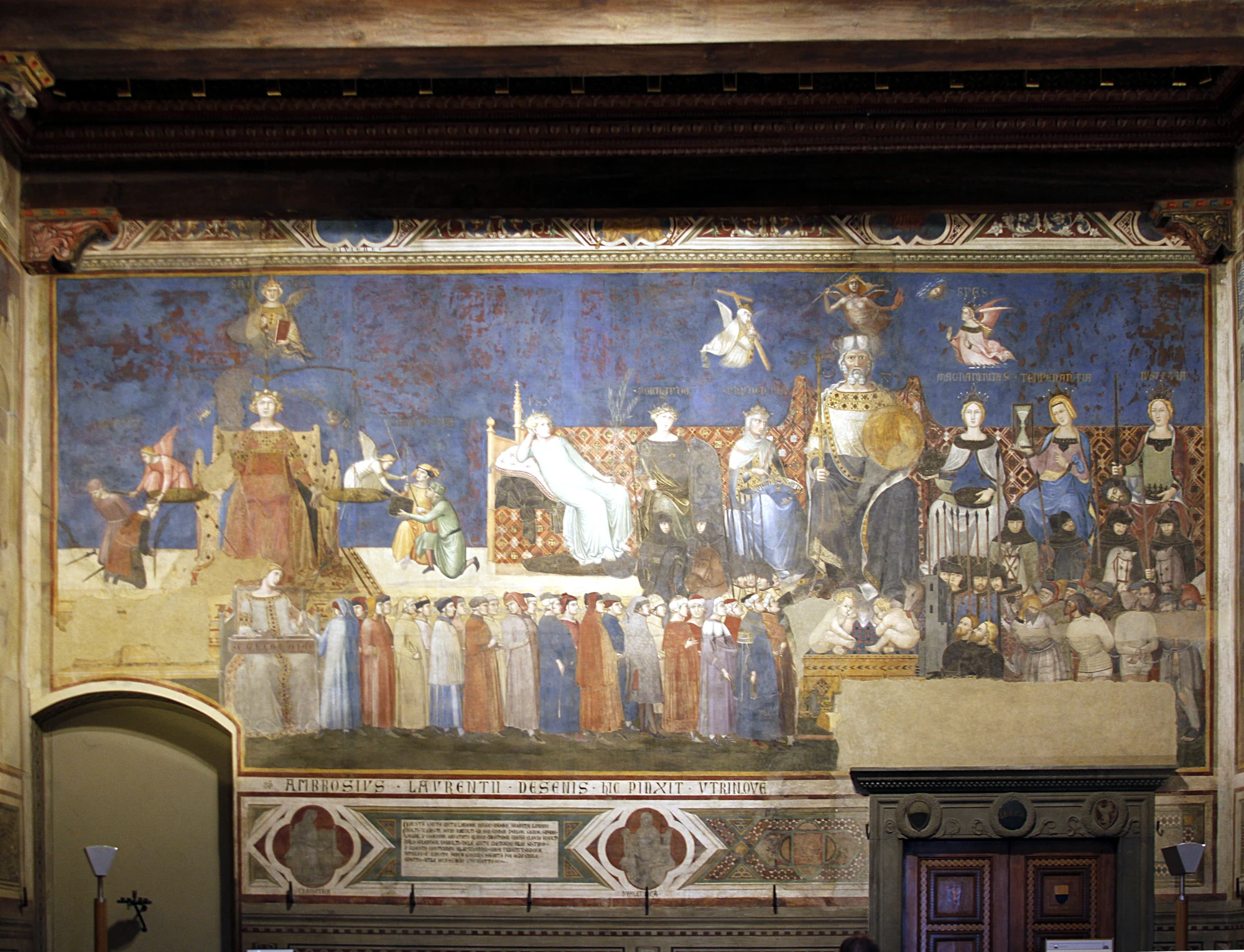
History as Moral Formation, Not Information
The modern textbook reduces history to a timeline: names, dates, causes, effects, review questions, move on. But for twenty-five centuries, the Western tradition understood history as something far more serious — a school of moral imagination. David Hicks, in Norms and Nobility: A Treatise on Education (1981), argued that the purpose of studying history is not to accumulate facts but to form judgment. The student who reads Plutarch’s Parallel Lives is not memorizing Greek and Roman biography. She is learning to weigh character, to distinguish true greatness from mere success, and to recognize the patterns of virtue and vice that repeat across every civilization.
Plutarch himself understood this. He composed his biographies in pairs — a Greek hero matched with a Roman counterpart — precisely so that the reader would be forced to compare, to judge, to ask: which life was better lived, and why? That is not trivia. That is the formation of moral reasoning, and it is exactly what is missing from an education that treats history as information retrieval.
The Goodness of History: Learning What Human Beings Ought to Be
The transcendental of goodness is the beating heart of narrative history. History taught as story — not as data — reveals what human beings are capable of at their best and what they descend to at their worst. Charlotte Mason, the great English educator whose methods shaped a generation of homeschoolers, insisted on what she called “living books” — real narratives by real authors, not committee-written textbook summaries — because she understood that children learn moral truth through encountering real human beings in real circumstances, not through abstracted principles presented in bullet points.
When a student reads Thucydides’ account of the plague in Athens, she is not learning a “fact about ancient Greece.” She is watching a civilization respond to catastrophe and asking herself what she would have done. When a student reads Lincoln’s Second Inaugural Address, he is not filling in a worksheet. He is hearing a man try to bind up the wounds of a nation that nearly destroyed itself, and he is being formed — whether he knows it or not — in the habits of mercy and justice that Lincoln was calling for.
The Great Hearts Approach: History and Literature as OnePhasing in Fall 2028+
The Great Hearts Humane Letters sequence, which Virtualis delivers in grades 9 through 12, integrates history and literature into a single two-hour daily seminar. This is not a scheduling convenience. It is a philosophical conviction: the human story cannot be understood in fragments. You cannot read the Federalist Papers without understanding the Revolution that produced them. You cannot understand the Revolution without reading Locke. You cannot understand Locke without reading Aquinas, and you cannot understand Aquinas without reading Aristotle. The curriculum is built as a single, continuous thread from the ancient world to the modern, and the student who follows it arrives at graduation with something no textbook survey can give: a coherent understanding of how civilization got from Athens to the present day.
What This Means for Your Child
Your child will not memorize dates and fill in blanks at Virtualis. He will read the actual words of Herodotus and Plutarch, Augustine and Aquinas, the Founders and Lincoln. He will sit in a Socratic seminar and be asked not “what happened?” but “was this just?” and “what would you have done?” By the time he graduates, he will possess what David Hicks called the normative vision — a sense of what human beings ought to be, formed not by slogans but by the long, patient study of what they have actually been. That is the gift of narrative history, and it is the gift your child deserves.
What We Read
Representative primary sources and Great Books our history students encounter across thirteen years.
Story & Memory
Grades K–5
- D’Aulaires’ Book of Greek Myths
- Famous Men of Rome — Haaren & Poland
- Core Knowledge History & Geography
- Story of the World — Susan Wise Bauer
- Tales from Shakespeare — Charles Lamb
- The Children’s Homer — Padraic Colum
- American Lives for Young Readers
Source & Argument
Grades 6–8
- Herodotus — The Histories (sel.)
- Thucydides — Peloponnesian War (sel.)
- Plutarch — Lives of Noble Greeks & Romans
- Livy — The Early History of Rome (sel.)
- Augustine — The City of God (sel.)
- Magna Carta · U.S. Constitution
- Declaration of Independence
Humane Letters
Grades 9–12
- Homer — Iliad & Odyssey
- Plato — Republic & Apology
- Aristotle — Nicomachean Ethics
- Virgil — The Aeneid
- Augustine — Confessions
- Dante — The Divine Comedy
- Federalist Papers · Lincoln
- King — Letter from Birmingham Jail
Reading lists are representative. Specific texts may vary by year and grade level.
How We Teach
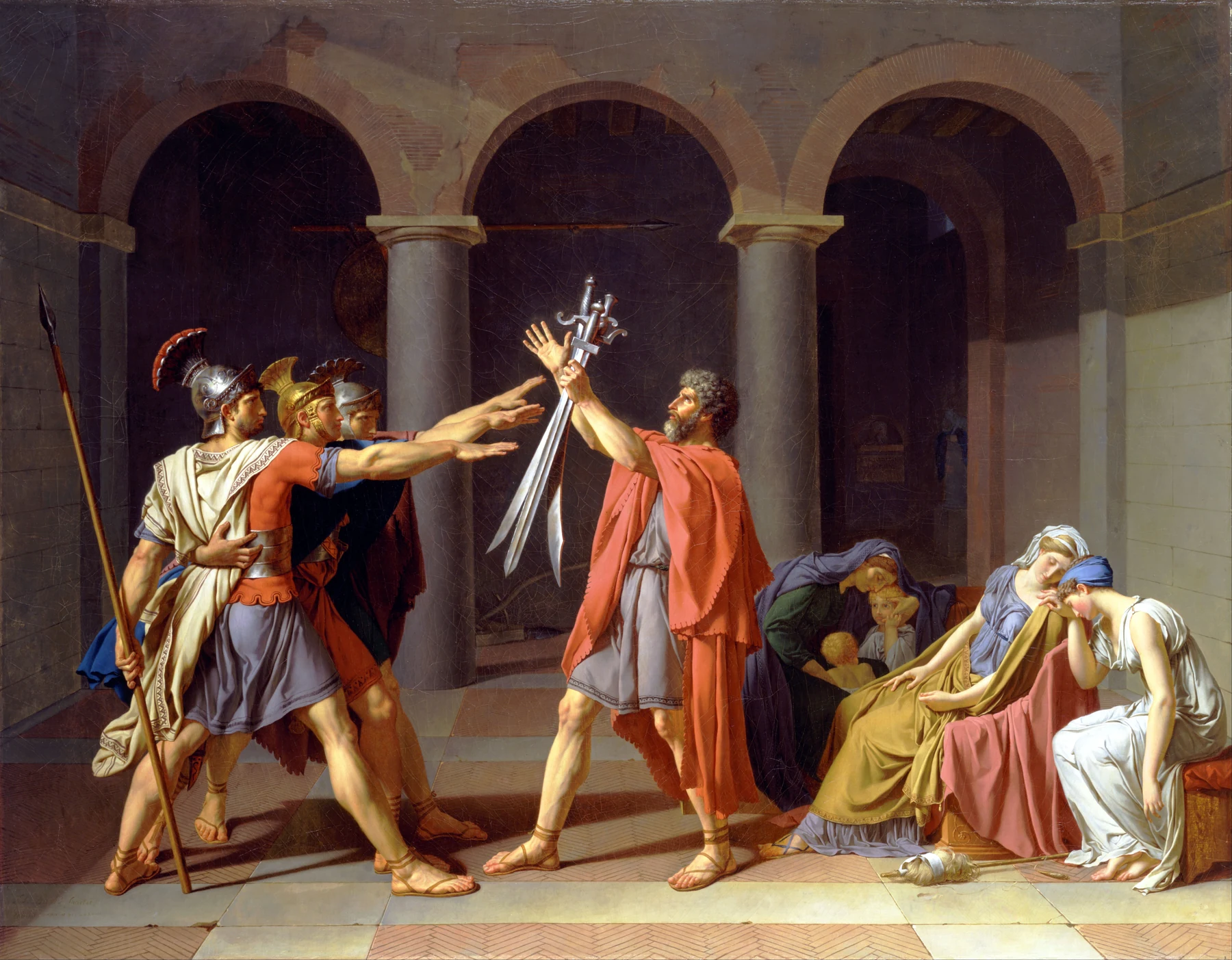
Primary Sources, Not Summaries
From middle school onward, students read the actual words of the people who shaped history. They read Thucydides, not a paragraph about Thucydides. They read the Constitution, not a synopsis. This develops close reading, careful reasoning, and intellectual independence that a textbook survey can never produce.
Socratic Discussion, Not Lecture
In Humane Letters and middle-school history seminars, the teacher leads a Socratic discussion in which students grapple with the text, defend interpretations from textual evidence, challenge peers, and refine their thinking in real time. Wisdom is formed by active engagement with great ideas, not by passive reception of them.
History as Moral Formation
Classical education rejects the assumption that history is value-neutral. Students learn that historical events have moral meaning. They make judgments about justice and injustice, courage and cowardice, generosity and greed — forming the moral imagination that public-school history deliberately refuses to shape.
What has been is what will be, and what has been done is what will be done; and there is nothing new under the sun.— Ecclesiastes 1:9
Common Questions
Primary sources, not textbook summaries. Students read Thucydides, Plutarch, the Federalist Papers, Lincoln, Augustine, Aquinas, and the great historians and philosophers themselves rather than a modern author’s paragraph about them. See the reading list for representative titles by grade.
Students annotate their primary source before class, bring prepared questions, and meet live in a small cohort with a credentialed teacher who guides structured discussion rather than lecturing. The format is face-to-face over live video, not asynchronous discussion boards or recorded lectures.
In grades 9–12 English and History merge into a single two-hour daily seminar called Humane Letters — the signature course of a Great Hearts upper school. Philosophy, drama, political theory, autobiography, and history are read together because the human story cannot be understood in fragments.
Public-school history relies on textbook surveys and multiple-choice testing. Virtualis uses the Core Knowledge sequence in K–5, primary sources and extended writing in 6–8, and the Great Books of Western civilization in a two-hour Humane Letters seminar in 9–12. Students write historical arguments from primary-source evidence rather than filling in worksheets.
No. Students encounter the Christian tradition through the texts themselves — Augustine’s Confessions, Aquinas’s Summa, the Scripture, the great Christian humanists — rather than through predigested summary. They read Rousseau and Marx alongside Augustine, and the Enlightenment alongside Aquinas. Classical education is formation in the serious questions, not a set of predetermined answers.