
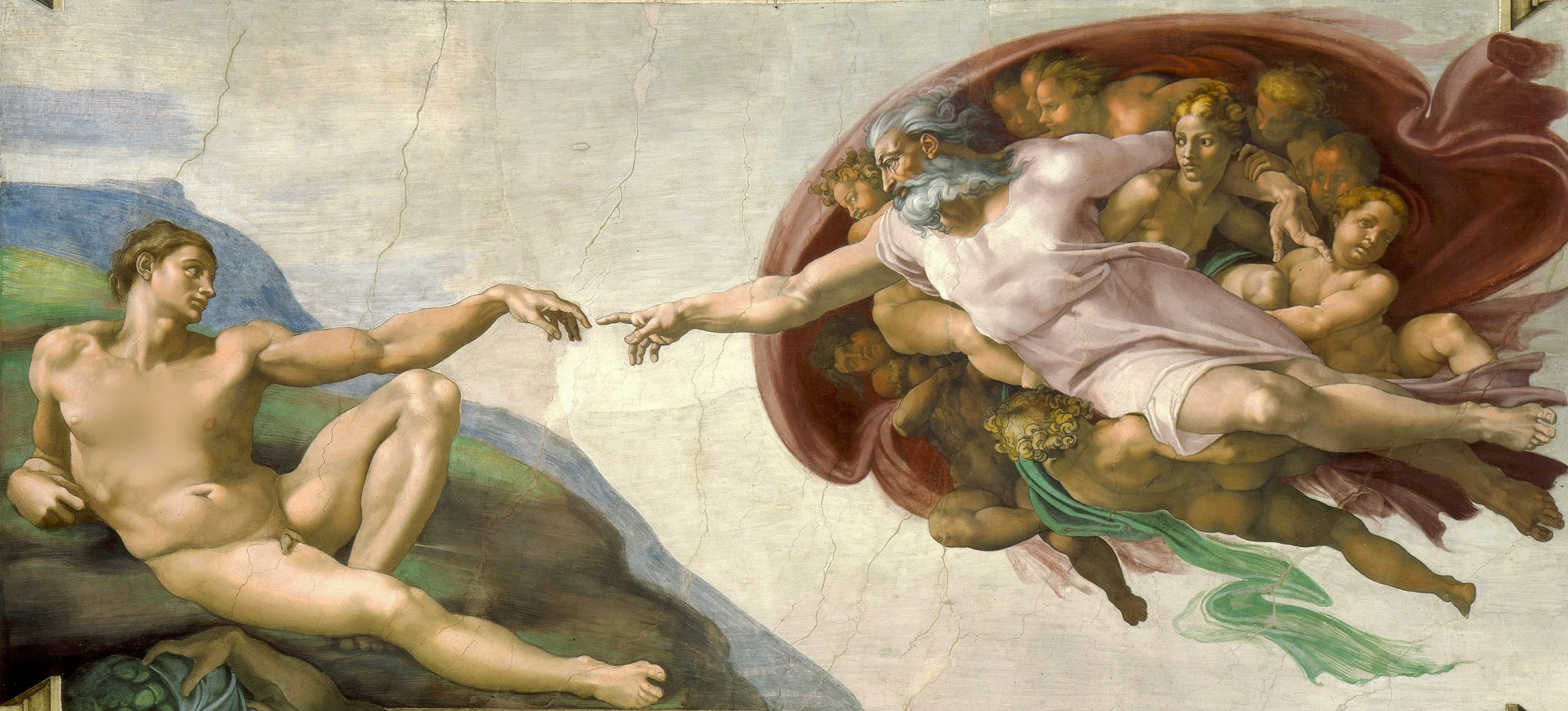
The Plain Truth
Virtualis is a Christian classical school. Catholic, Evangelical, Orthodox, Anglican, Lutheran, Baptist, Reformed — every Christian family is welcome.
Our founders are Catholic and were formed in the Catholic intellectual tradition. The school we built is not a Catholic school. We are not under diocesan authority. We do not catechize children into any one confession.
We say this plainly. Catholic families should know what we are. Protestant and Orthodox families should know they are welcome — not merely tolerated.
“Whatever is true, whatever is honorable, whatever is just, whatever is pure, whatever is lovely, whatever is gracious, if there is any excellence, if there is anything worthy of praise, think about these things.”
Philippians 4:8 · RSV-CEWhy This Tradition
When we say we are rooted in the Catholic intellectual tradition, we mean we draw on Augustine, Aquinas, and Newman — the minds who shaped the liberal arts, the Great Books, and the conviction that faith and reason are partners.
That tradition belongs to all Christians. The word catholic is Greek for universal — kath’ holou, “according to the whole.” Protestants read Aquinas. Orthodox read Augustine. Evangelicals read Newman. It is shared inheritance.
The Nicene Creed
Formulated at the Councils of Nicaea (325) and Constantinople (381), the Nicene Creed is professed by Catholics at every Mass and affirmed by Orthodox, Anglicans, Lutherans, Methodists, Presbyterians, and most historic Protestant traditions. This is the faith we teach. Christian families of every tradition are welcomed here.
-
I
The Father Almighty
“I believe in one God, the Father almighty, maker of heaven and earth, of all things visible and invisible.”
-
II
One Lord Jesus Christ
“I believe in one Lord Jesus Christ, the Only Begotten Son of God, born of the Father before all ages. God from God, Light from Light, true God from true God, begotten, not made, consubstantial with the Father; through him all things were made.”
-
III
Incarnate of the Virgin Mary
“For us men and for our salvation he came down from heaven, and by the Holy Spirit was incarnate of the Virgin Mary, and became man.”
-
IV
Crucified, Died, and Rose Again
“For our sake he was crucified under Pontius Pilate, he suffered death and was buried, and rose again on the third day in accordance with the Scriptures.”
-
V
Ascended and Coming Again
“He ascended into heaven and is seated at the right hand of the Father. He will come again in glory to judge the living and the dead, and his kingdom will have no end.”
-
VI
The Holy Spirit
“I believe in the Holy Spirit, the Lord, the giver of life, who proceeds from the Father and the Son, who with the Father and the Son is adored and glorified, who has spoken through the prophets.”
-
VII
The Church and the Life to Come
“I believe in one, holy, catholic and apostolic Church. I confess one baptism for the forgiveness of sins, and I look forward to the resurrection of the dead and the life of the world to come. Amen.”
Full Statement of Faith in our Parent & Student Handbook.
What This Means for Your Family
The shape of a Virtualis education, set down plainly:
- Your child will read the Great Books — Homer, Augustine, Dante, Shakespeare, Dostoyevsky.
- Your child will study Latin and a Christian anthropology grounded in Scripture.
- Your child will not be asked to participate in sacramental practices specific to any denomination.
- Your family’s faith will be respected. We do not undermine your parish.
- Full details are in our Parent Handbook and Statement of Faith.
Take it deeper.
Plenitudo Vitae. — The fullness of life.Two things no other online school is offering — both designed to wrap around your child’s Virtualis academics, never to replace them.
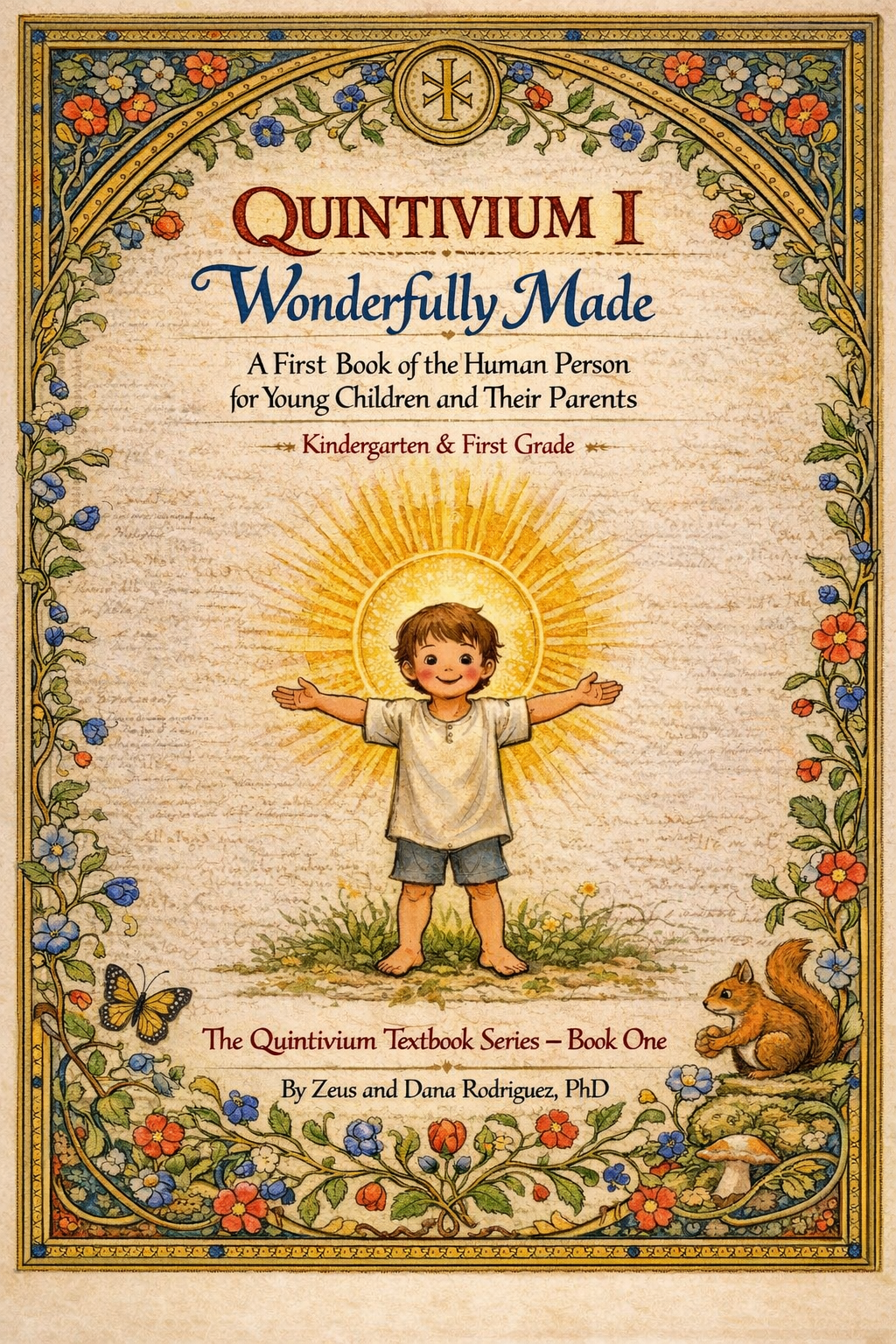 An Original Curriculum
Vitae Formation & the Quintivium
Vitae Formation is our optional formation companion. At its heart sits the Quintivium Series — the K–12 curriculum covering body, mind, ethics, theology, and politics. One volume per grade.
 Christian Pediatric Telemedicine
Christian Telemedicine
Through Vitae Health, enrolled families may opt in to pediatric telemedicine from a Christian clinician — care that respects your worldview and skips the insurance maze.