
Science as Natural Philosophy
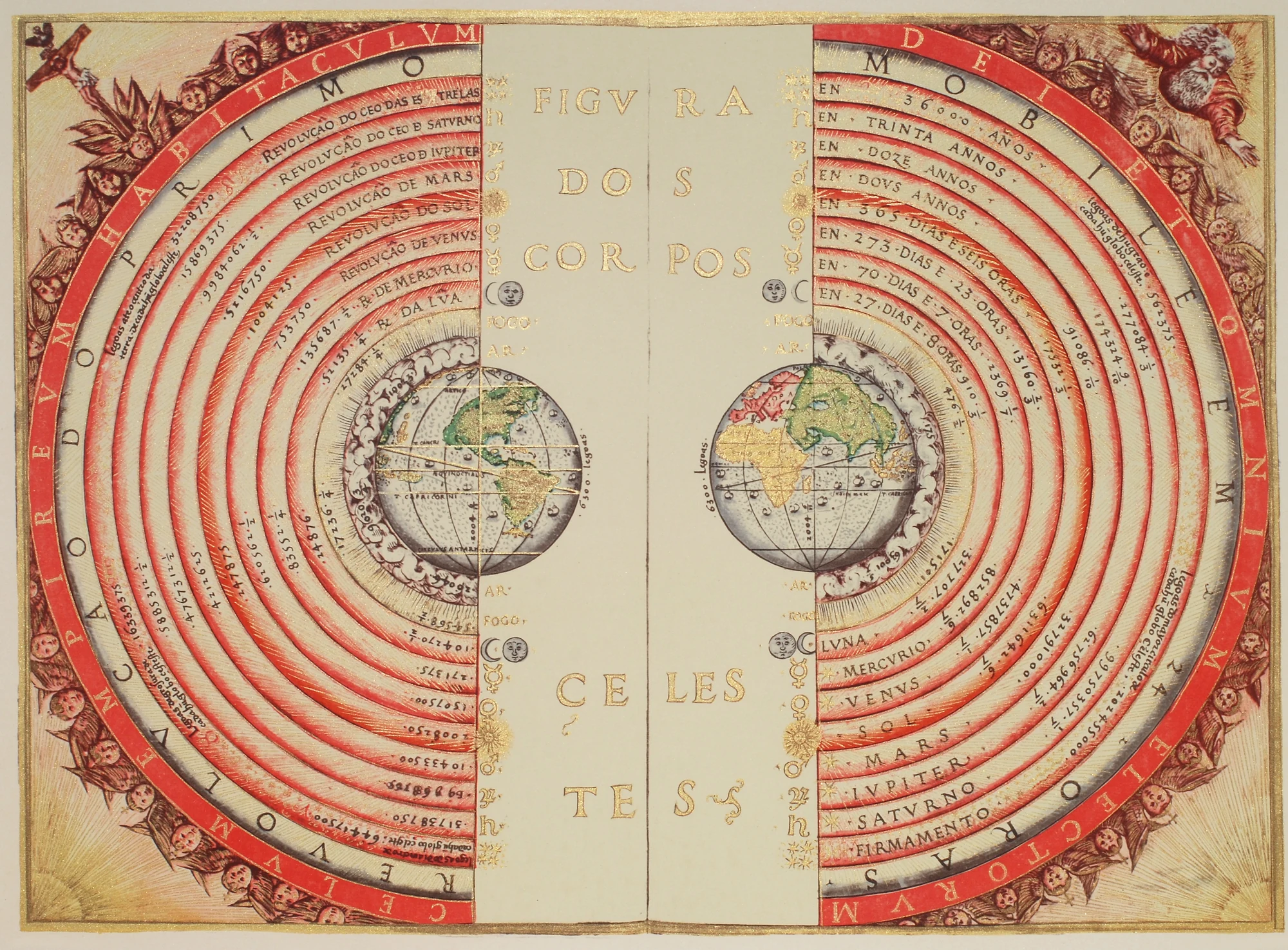
Before the word “science” entered common usage, the study of the natural world was called natural philosophy — the love of wisdom gained through careful attention to creation. At Virtualis, a Christian classical academy rooted in the Catholic intellectual tradition, we recover this ancient understanding.
Science is not a collection of disconnected facts to memorize for a test. It is a disciplined act of attention: the patient observation of God’s creation, the search for order and first principles, and the cultivation of wonder at the beauty and intelligibility of the world.
From kindergarten through fifth grade, our students absorb the vocabulary of science, observe living things with fresh eyes, and build a rich storehouse of factual knowledge using the Core Knowledge Science sequence — the same program used by Great Hearts Academies. In middle school, science becomes a discipline of critical inquiry: Natural History in 6th grade, Physical Science in 7th, and Earth Science in 8th, each with lab-based observation and nature journaling.
In high school Phasing in Fall 2028+, students complete four full years of college-preparatory science in the Great Hearts Online sequence: Biology in 9th, Physics I in 10th, Physics II in 11th, and Chemistry in 12th. Chemistry is taught last, after two years of physics and the calculus students are taking in parallel, so that they bring mathematical maturity to the study of matter.
Why Science as Natural Philosophy? The Case Every Parent Should Hear
Science Is Not Opposed to Faith — It Was Born from It
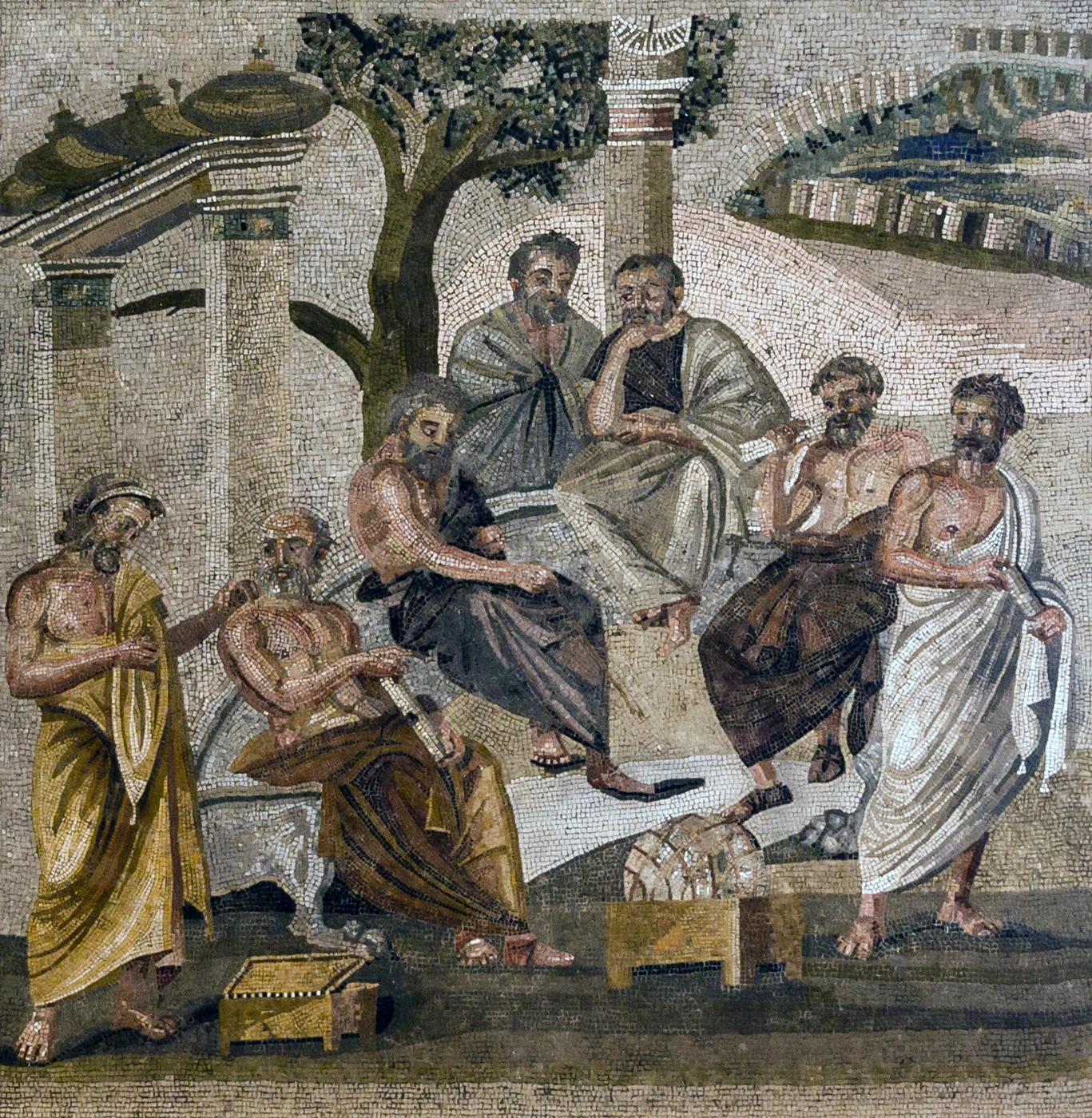
The modern world has inherited a false story: that science and faith are enemies, that the laboratory and the cathedral stand on opposite sides of a wall. The historical record says otherwise. The scientific revolution was overwhelmingly the work of believing Christians — Copernicus, Kepler, Galileo, Newton, Faraday, Mendel, Pasteur, Lemaître — who studied nature precisely because they believed it was created by a rational God and was therefore intelligible to rational minds. Stanley Jaki, the Benedictine priest and philosopher of science, argued in The Savior of Science (1988) that the doctrine of creation was the indispensable foundation of the scientific enterprise: only a culture that believed the universe was freely made by a rational Creator could develop the confidence that the universe could be rationally understood.
Francis Bacon, the father of the experimental method, put it plainly: God has given us two books — the book of Scripture and the book of His works. To study nature is to read the second book, and to read it well is an act of reverence. At Virtualis, science education begins with this conviction: the natural world is not a collection of meaningless accidents. It is a creation, and to study it carefully is to encounter the mind of its Maker.
Truth: The World Is Intelligible Because It Was Made by Intelligence
The transcendental of truth is the foundation of all science. Science works — experiments can be repeated, predictions can be verified, laws can be discovered — because the universe is consistent, orderly, and rational. But why is it rational? The materialist has no answer to this question. The classical and Christian tradition does: the world is intelligible because it was made by an intelligent Creator. Robert Grosseteste, the thirteenth-century Bishop of Lincoln and one of the founders of the experimental method, studied optics and light not as a secular hobby but as a theologian — because he believed that physical light was an analogy of the divine light, and that understanding how light behaved was a pathway to understanding the God who made it.
This is not quaint medieval thinking. It is the intellectual foundation on which every physics laboratory in the world still operates, whether the physicists in it acknowledge it or not. When a scientist assumes that the laws of nature will be the same tomorrow as they were yesterday, she is making a theological claim — she is assuming that the universe is governed by a faithful lawgiver — even if she does not know she is making it.
Wonder Before Technique: The Socratic Laboratory
Modern science education often rushes past understanding to get to procedure. Students follow lab protocols they do not understand, record data they cannot interpret, and memorize formulas whose derivation they have never seen. The classical approach reverses this. Before a student performs an experiment, she must understand the question the experiment is designed to answer. Before she applies a formula, she must understand why the formula is true. The Socratic method applied to science means that the teacher does not simply demonstrate a result — she leads the student through the reasoning that produced it, so the student discovers the principle rather than merely receiving it.
Research in science education consistently supports this approach. Studies published by the Journal of Research in Science Teaching have shown that inquiry-based science instruction — where students generate questions, design investigations, and reason through explanations — produces deeper conceptual understanding and better transfer to novel problems than traditional lecture-and-lab formats. The Great Hearts science sequence is built on exactly this principle: understanding first, technique second, and always the question why before the question how.
What This Means for Your Child
Your child will not treat science as a set of facts to memorize and forget. She will learn to observe the natural world with care and wonder, to ask questions that matter, to reason through evidence, and to see the order in creation that points to the Creator. She will complete four full years of rigorous, college-preparatory science — Biology, Physics I, Physics II, and Chemistry — and she will understand what she has learned, not merely recall it. She will graduate knowing that science and faith are not rivals but allies, and that the habit of careful attention to truth is the same habit whether you are reading a Gospel or reading a thermometer.
What We Read
Representative texts, topics, and authors our science students encounter across thirteen years of natural philosophy.
Wonder & Discovery
Grades K–5
- Core Knowledge Science sequence
- The Burgess Bird Book for Children
- The Burgess Animal Book for Children
- Handbook of Nature Study — Comstock
- Apologia Young Explorer series
- The Storm Book — Charlotte Zolotow
- A Seed Is Sleepy — Aston & Long
Observation & Classification
Grades 6–8
- Linnaeus — Systema Naturae (sel.)
- Charles Darwin — Voyage of the Beagle (sel.)
- Galileo — Sidereus Nuncius (sel.)
- Rachel Carson — The Sea Around Us
- Apologia General Science
- Apologia Physical Science
- Field guides & nature journals
Mastery & Laboratory
Grades 9–12
- Biology — Miller & Levine
- Physics (Year I) — Hewitt
- Physics (Year II) — Serway
- Chemistry — Zumdahl
- Aristotle — Physics (sel.)
- Newton — Principia (sel.)
- Feynman Lectures (sel.)
- Primary lab-journal writing
Reading lists are representative. Specific texts and lab programs may vary by year and grade level.
How We Teach
Real Laboratory Work
A common question from parents: can students truly learn science online? The answer is yes — with intentionality and the right tools. Every Virtualis middle- and high-school science course includes hands-on experimentation. Students use home laboratory kits for hands-on work, complete guided virtual labs on a shared platform, and see live teacher demonstrations during class. Lab science at Virtualis is not optional.
Observation Before Theory
Great science begins with great observation. At Virtualis, students are trained to slow down, to notice, to ask questions. Rather than merely memorizing facts, they learn to think like natural philosophers: to observe phenomena, form hypotheses, design experiments, and draw reasoned conclusions. The scientific method is taught not as a rigid formula but as a discipline of thought — a way of approaching the world with intellectual humility and respect for evidence.
The Biology-Physics-Physics-Chemistry Sequence
Following the distinctive Great Hearts model, high-school science follows a deliberate order: Biology first, then two full years of Physics, then Chemistry. Chemistry comes last because students bring two years of physics and the mathematical maturity of concurrent calculus to the study of atomic structure, bonding, and reactions. The result is chemistry that is genuinely understood, not merely memorized.
The heavens declare the glory of God; and the firmament sheweth his handywork.— Psalm 19:1
Common Questions
Yes. Every Virtualis middle- and high-school science course includes real experimentation. Students use home laboratory kits for hands-on work, complete guided virtual labs on a shared platform, and see live teacher demonstrations during class. Lab science at Virtualis is not optional — it is a core part of every science course.
Following the Great Hearts Online sequence, students study Biology in 9th, Physics I in 10th, Physics II in 11th, and Chemistry in 12th. Physics is taught first so that students have mathematical maturity and conceptual fluency when they reach atomic structure, bonding, and chemical reactions. The result is chemistry that is genuinely understood.
Natural philosophy is the older name for the study of the natural world: patient observation, first-principles reasoning, and wonder at the intelligibility of creation. Our students recover this understanding by studying science not as a set of disconnected facts but as a disciplined act of attention to God’s created order.
The Christian classical tradition has always understood faith and reason as complementary paths to truth. Students learn science as an investigation of the rational order God has woven into creation, not as a rival to it. They read Aristotle alongside Galileo, and they learn to distinguish what science can and cannot answer.
Public-school science typically reduces the subject to a set of procedures and terms to be memorized for a standardized test. Virtualis teaches science as a disciplined act of observation and reasoning, requires real lab work and lab-journal writing, and places the whole enterprise in the older tradition of natural philosophy that produced Newton, Kepler, Galileo, and Mendel.