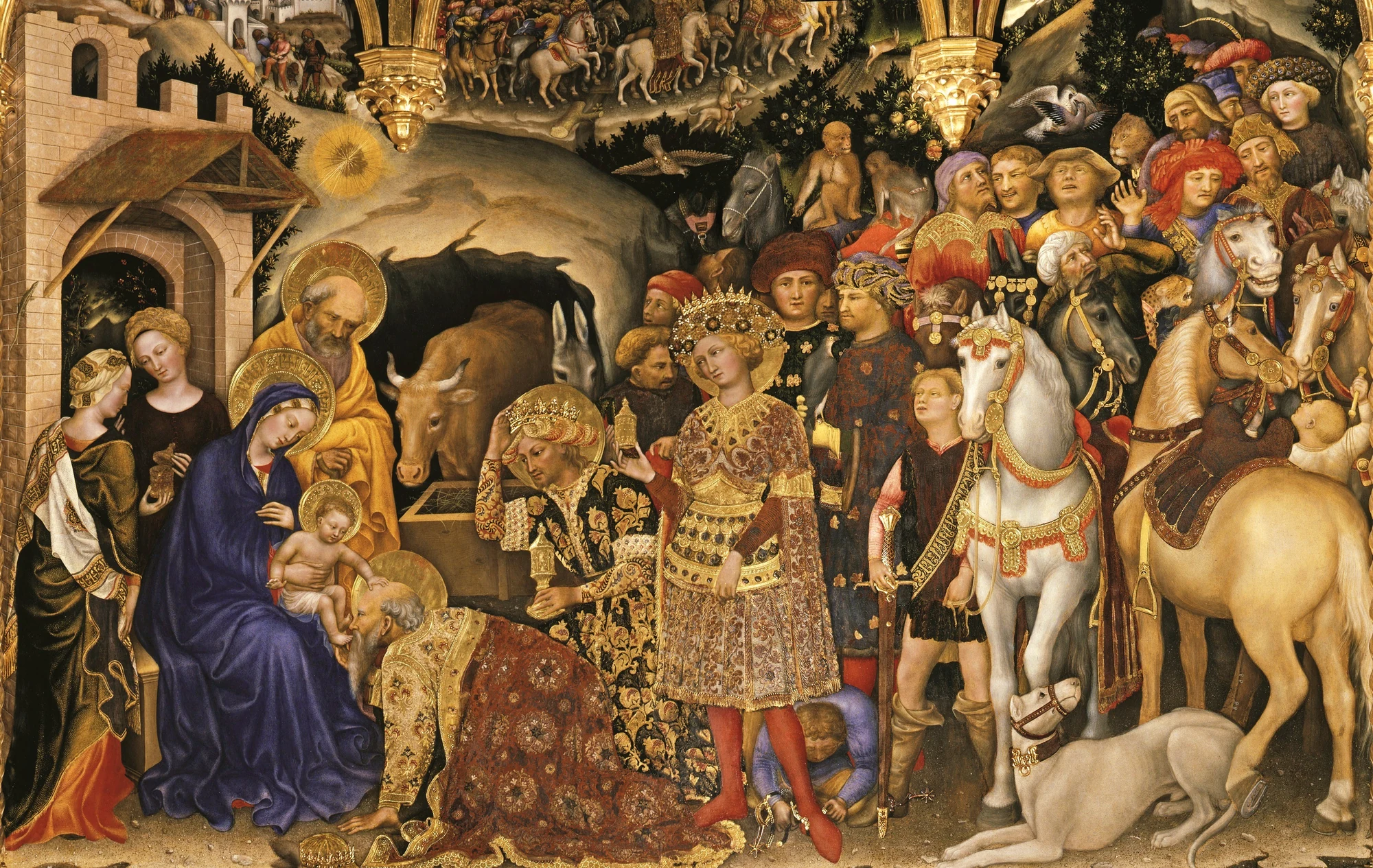
Long before there were schools, there were families. Long before there were textbooks, there were stories told over food. If you ask where the education of children happened for most of human history, the honest answer is: around a table, with parents, at the end of the day. The schoolhouse is the young institution. The dinner table is the old one.
This is not nostalgia. It is a claim about what formation actually requires — what it takes to form a child into a whole human being. And the claim is this: no curriculum, however good, can replace what happens at the dinner table. The school is a help, not a substitute.
Parents are the first teachers
The Second Vatican Council put it plainly: parents are the primary and principal educators of their children. The Church did not invent this idea. It recognized it. The same thing is true of the Jewish tradition, the classical Greek tradition, and every serious pre-modern culture. The family is the first school, and everything else is meant to serve it.
This is a demanding claim. It means that when a child learns what it means to be patient, she learns it mostly by watching her parents be patient. When she learns what generosity looks like, she learns it by watching generosity get practiced in her own kitchen. When she learns to pray, she learns it because her parents pray. No outside institution can give a child what she does not first receive from the people who love her.
Come, my children, listen to me; I will teach you the fear of the Lord. — Psalm 34:11
Reading aloud is not optional
One of the easiest and most neglected things a parent can do is read aloud to her children. Read to them when they are two. Read to them when they are seven. Read to them when they are thirteen and rolling their eyes at you. Read to them when they are sixteen and can read anything you can put in front of them. Read the Gospel. Read Charlotte’s Web. Read The Hobbit. Read Homer, eventually. Read slowly, with expression, and do not worry if you do not understand everything.
When you read aloud, you are not just teaching vocabulary or comprehension. You are teaching your child that stories matter, that words are worth slowing down for, that the two of you can share a world. You are also, practically, teaching her to love reading by associating it with your voice. Very few children who are read to regularly grow up hating books.
The meal is the classroom
The most important educational hour in a child’s day is not at school. It is dinner. If you eat together, if you talk, if you listen, if you ask real questions and accept imperfect answers, you are forming your child. You are teaching her that she is a person whose ideas are worth hearing. You are teaching her that a family is a place where the day gets narrated and sorted out. You are teaching her that food is a gift to be shared and not consumed alone in front of a screen.
None of this has to be fancy. A grilled cheese on a weeknight counts. What matters is that the meal is shared, that phones are put down, that grace is said, that the conversation is allowed to wander. A child raised on these meals grows up knowing how to sit with other people without needing to be entertained. That is a skill no class can teach her.
Why an online school helps
Here is an argument for choosing an online classical school that you do not hear often: it gives you back the afternoons. Virtualis ends its live school day by early afternoon. That leaves hours every day for the things that school cannot do — a shared walk, help in the kitchen, a chapter read aloud, a piano lesson, a chore, a conversation. It leaves time for the dinner table to do its work.
Schools are good. We run one. But a school is a partner to the family, not a replacement for it. The most valuable hours of a child’s education will always be the ones she spends at home, with the people who love her most. Our job is to give your student a rigorous classical curriculum in the morning. Your job is to give her everything else, and most of that happens over dinner.